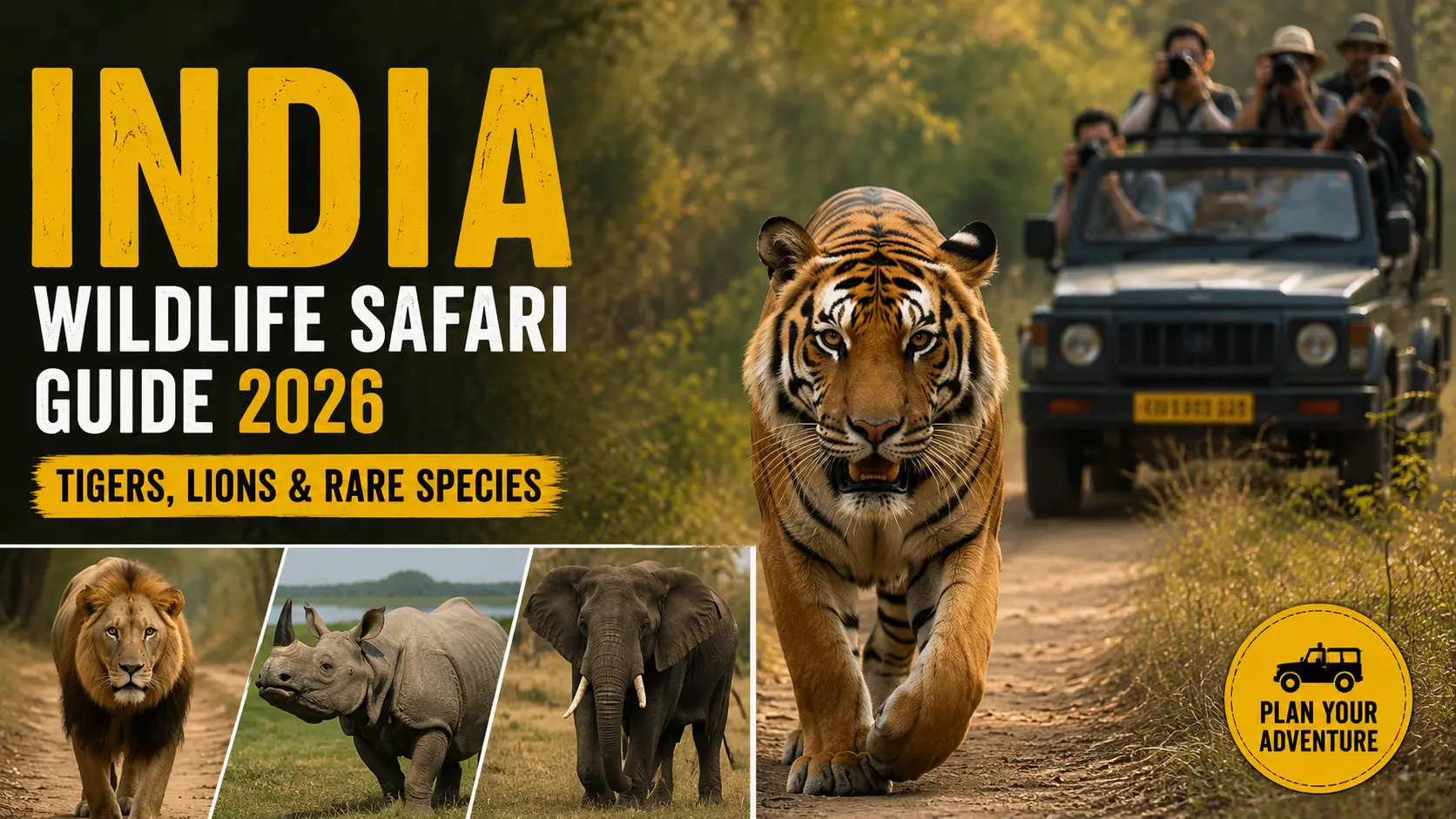
Complete India Wildlife Safari Guide 2026: Best Parks for Tigers, Lions & Rare Species
By Mukesh Sain | Founder, My Dream India Tour | Jaipur, Rajasthan Last Updated: 2026 | Reading Time: 15 minutes
I still remember the exact moment.
It was a cold November morning at Ranthambore — 6:15 AM, Zone 3, the jeep engine switched off, the forest completely silent except for the distant alarm call of a sambar deer. My guests — a retired couple from Colorado — had been sitting motionless for forty minutes, eyes scanning the tall grass around Padam Lake.
And then she appeared.
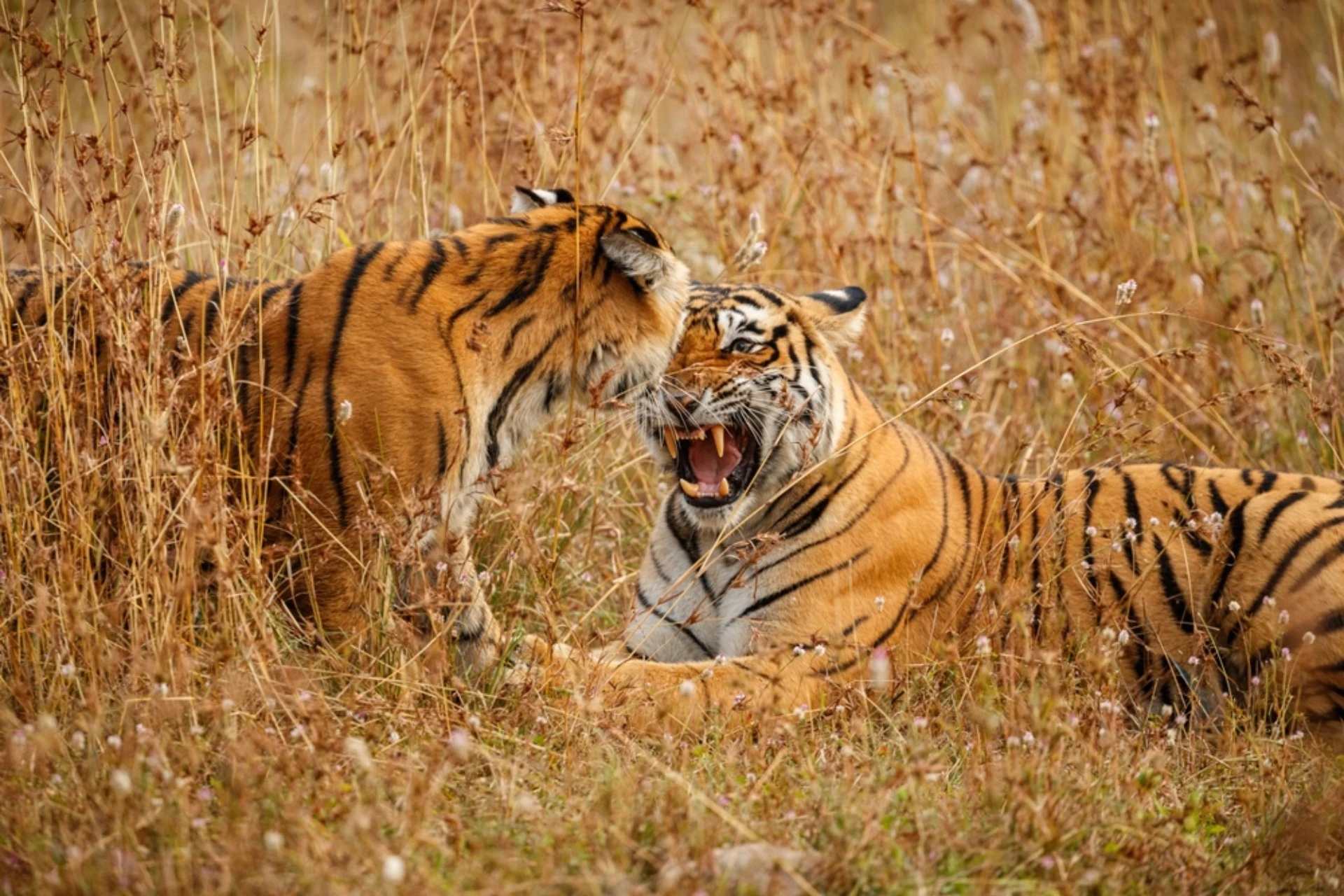
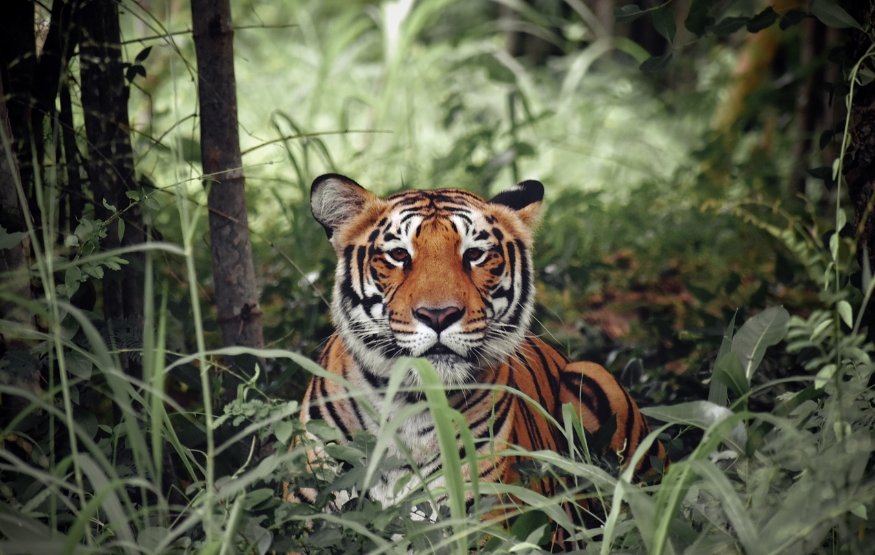
A full-grown tigress. Moving with that extraordinary unhurried confidence that only a tiger at the top of its food chain possesses. She walked directly to the lake edge fifteen metres from our jeep, lowered her great head, and drank. Unhurried. Completely unimpressed by us.
The woman from Colorado had tears running down her face. Her husband was trying to photograph and failing because his hands were shaking.
I have guided hundreds of safari guests through India's national parks. That moment — and the thousand like it I have witnessed over the years — is why I consider an India wildlife safari one of the most extraordinary experiences available to any international traveller.
This guide covers everything you need to plan yours.
Quick Answer
Best parks for tiger safari India: Ranthambore (Rajasthan), Bandhavgarh (MP), Kanha (MP), Jim Corbett (Uttarakhand), Pench (MP)
Which Indian national park has lions: Gir National Park, Gujarat — the only place on Earth
Best park for one-horned rhinos: Kaziranga National Park, Assam — over two-thirds of the world's entire rhino population
Can I combine with Golden Triangle: Yes — Ranthambore is just 3 hours from Jaipur and 5 hours from Delhi — the perfect Golden Triangle wildlife addition
Best time for India wildlife safari: October to April — peak season November to March
Why India's Wildlife Is Unlike Anywhere Else on Earth
Before we explore the parks, I want you to understand something that genuinely sets India apart from every other wildlife destination on the planet.
India is home to 106 national parks and 574 wildlife sanctuaries, home to over 450 different species of mammals and over 1,300 bird species.
But raw numbers do not capture what makes India's wildlife truly extraordinary. What makes India unique is the combination of species variety — you can see tigers, lions, rhinos, elephants, leopards, and snow leopards all within a single country — combined with a density of wildlife encounters that rivals Africa's best reserves.
India with a population of 4,000+ tigers has about three-quarters of the world's wild tigers roaming in 50 tiger reserves. That extraordinary concentration is why a Ranthambore tiger sighting is not a lucky accident — it is a planned, guided, expert-led experience with genuinely high sighting probability.
And there is something else. India's wildlife does not exist in isolation from its cultural heritage. Ranthambore's tigers prowl beneath a 10th-century Rajput fort. Kanha's meadows inspired Rudyard Kipling's Jungle Book. Kaziranga's rhinos graze against the backdrop of the Brahmaputra River and the eastern Himalayas.
In India, the natural world and the human story are inseparable. That is what makes an India wildlife safari profoundly different — and profoundly more layered — than any other safari experience on earth.
The Complete Guide to India's Best National Parks
Best Parks for Tiger Safari in India
1. Ranthambore National Park, Rajasthan
The Most Accessible Tiger Safari in India
Location: Sawai Madhopur, Rajasthan
Distance from Delhi: 340 km (5 hours by road)
Distance from Jaipur: 180 km (3 hours by road)
Tiger Population: 70+ tigers (2026 census)
Best Time: October to June (peak: November to April)
Safari Type: Shared gypsy (6 passengers) or private canter — zone permits booked in advance
UNESCO Status: ✅ World Heritage Site (Hill Forts of Rajasthan includes Ranthambore Fort)
Ranthambore is India's single most popular tiger destination — and for good reason. Its tigers are famously diurnal (active during the day), its forests are relatively open compared to central India's dense sal woodlands, and the ancient Ranthambore Fort rising from the landscape gives every photograph a cinematic backdrop few other parks can match.
For international travellers — particularly those combining a wildlife safari with the Golden Triangle heritage circuit — Ranthambore is the single most recommended first tiger park. The combination of excellent tiger sighting rates, dramatic fort-and-jungle landscape, and proximity to Jaipur makes it India's most compelling wildlife experience for first-time visitors.
Why I recommend Ranthambore specifically for my guests:
The tigers of Ranthambore are remarkably relaxed around safari vehicles — a result of decades of habituation to responsible tourism. When a Ranthambore tiger decides to walk along the jeep track or sit at a waterhole, it does so at its own pace, completely unbothered by the cameras and gasping guests twenty feet away. This proximity — and this unhurried quality — is what makes Ranthambore tiger sightings genuinely extraordinary compared to dense forest reserves where a glimpse through the undergrowth is the typical encounter.
Best zones for tiger sightings: Zones 2, 3, and 4 — the core zone lakes and surrounding forest — offer the highest tiger sighting probability and the most photogenic backdrops.
2. Bandhavgarh National Park, Madhya Pradesh
Highest Tiger Density in India
Location: Umaria district, Madhya Pradesh
Distance from Delhi: Fly to Jabalpur (1.5 hrs) + 3 hours by road
Tiger Population: 115+ tigers — highest density in India
Best Time: October to June (peak: February to May)
Safari Type: Private jeep safari (Tala zone)
Bandhavgarh is considered one of the best national parks for tiger sightings in India. If maximum tiger encounter probability is your primary objective, Bandhavgarh delivers it more reliably than any other Indian reserve.
The Tala zone — the best tiger zone in Bandhavgarh — combines dense tiger population with the extraordinary backdrop of the ancient Bandhavgarh Fort ruins perched on a 811-metre rock outcrop above the jungle. Walking the fort approach with a guide after your morning safari is a haunting, memorable experience — wildlife and heritage inseparably combined.
What makes Bandhavgarh different from Ranthambore: While Ranthambore's landscape is more open and photogenic, Bandhavgarh's tiger density is higher — multiple tiger families occupy relatively compact territory, and encounters are often longer and closer. For serious wildlife photographers, Bandhavgarh is frequently the first choice.
3. Kanha National Park, Madhya Pradesh
The Jungle Book Park — India's Most Beautiful Reserve
Location: Mandla and Balaghat districts, Madhya Pradesh
Distance from Delhi: Fly to Nagpur (1.5 hrs) + 4 hours by road
Tiger Population: 100+ tigers
Best Time: October to June (closed July-September)
Safari Type: Private jeep and canter safaris
Rudyard Kipling drew direct inspiration for The Jungle Book from Kanha's forests — and visiting today, it is immediately clear why. Kanha is India's most classically beautiful national park: vast sweeping meadows (called maidans) of golden grass surrounded by dense sal forest, where tigers, leopards, barasingha (found only here), and wild dogs roam in extraordinary numbers.
Kanha is where the critically endangered barasingha (hard-ground swamp deer) was brought back from near- extinction through dedicated conservation. Today, over 800 barasingha roam Kanha's meadows — one of India's greatest wildlife recovery stories.
Best combination: Kanha + Bandhavgarh (4 days each) is India's finest multi-park tiger safari circuit, and our most requested wildlife package for international guests from the USA, Germany, and UK.
4. Jim Corbett National Park, Uttarakhand
Asia's Oldest National Park
Location: Nainital district, Uttarakhand
Distance from Delhi: 260 km (5 hours by road)
Tiger Population: 260+ tigers (largest in any single park)
Best Time: November to June (Dhikala zone closes in monsoon)
Safari Type: Jeep safari + elephant safari (select zones)
Jim Corbett holds a unique place in India's wildlife history: it is the oldest national park in Asia, established in 1936, and gave the iconic Project Tiger its first home in 1973. Its location in the Himalayan foothills of Uttarakhand creates a dramatically different landscape from Rajasthan and central India — dense riverine forest, tall grass meadows, and the broad Ramganga River flowing through tiger habitat of extraordinary richness.
Corbett has the highest tiger population of any single Indian national park — but its dense vegetation means sightings are less predictable than Ranthambore or Bandhavgarh. The compensation is an extraordinary breadth of wildlife: over 600 bird species (making Corbett a paradise for birdwatchers), wild Asian elephants, leopards, king cobras, and gharial crocodiles in the Ramganga River.
Best for: Travellers combining Delhi with a hill station visit, serious birdwatchers, and those wanting a Himalayan landscape alongside their tiger safari.
Asiatic Lion Safari — Gir National Park, Gujarat
The Only Place on Earth
Location: Junagadh district, Gujarat (400 km from Ahmedabad)
Lion Population: 600+ Asiatic lions (2026 census)
Best Time: December to March
Safari Type: Jeep safari in designated zones
Gir is the only place on the entire planet where you can see wild Asiatic lions.
This single fact makes Gir National Park one of the most extraordinary wildlife destinations on earth. Once hunted to near-extinction — with fewer than 20 individuals remaining in the early 20th century — the Asiatic lion has made one of conservation's most dramatic recoveries.
The Asiatic lion population has made a dramatic recovery at Gir — today over 600 lions roam the forest and surrounding areas, making Gir one of conservation's greatest success stories.
An Asiatic lion safari at Gir is a genuinely different experience from an African lion safari — and in the best possible way. The lions here are habituated to safari vehicles and often completely unconcerned by human presence. Sightings of prides with cubs, males in territorial confrontation, and lions resting in teak forest clearings are all common.
Besides lions, there are around 32 species of mammals, over 300 species of birds, and 26 of reptiles at Gir.
Gir pairs perfectly with: Our Gujarat Tour Package — combining the Rann of Kutch's white salt desert, Somnath Temple, Junagadh's historic citadel, and Gir's lion safari in one extraordinary western India circuit.
One-Horned Rhino Safari — Kaziranga National Park, Assam
The Rhino Capital of the World
Location: Golaghat and Nagaon districts, Assam
Rhino Population: 2,613 one-horned rhinos (over 2/3 of world population)
Best Time: November to April
Safari Type: Jeep safari + elephant safari (morning)
UNESCO Status: ✅ UNESCO World Heritage Site (1985)
Kaziranga National Park is one of the world's most extraordinary conservation triumphs. A UNESCO World Heritage Site, this magnificent park in Assam shelters over two-thirds of the entire world population of the Indian One-Horned Rhinoceros — making it the undisputed rhino capital of the planet.
Kaziranga's setting is extraordinary — Brahmaputra River floodplains stretching to the horizon, with the misty eastern Himalayas rising beyond. The morning elephant safari at Kaziranga — riding atop a trained elephant into tall elephant grass at dawn, with rhinos grazing twenty feet away — is one of India's most extraordinary and most intimate wildlife experiences.
Wildlife to expect: One-horned rhinos, wild Asian elephants, Bengal tigers, wild water buffalo, swamp deer, and over 480 species of birds.
My honest note: Kaziranga is further from the standard India tourist circuit (it requires flying to Guwahati in Assam). But for wildlife enthusiasts from the USA, UK, Germany, and Australia who specifically seek the one-horned rhino — it is completely worth the additional journey. Nothing prepares you for the scale and presence of a full-grown Indian rhino at close range on an elephant safari.
Additional Notable Parks — India's Rare Species
Snow Leopard — Hemis National Park, Ladakh: At high altitude, Hemis offers a rare chance to see the elusive snow leopard alongside Himalayan wildlife, dramatic mountains and cold-desert safari trails. Best time: January to March. Extremely challenging but potentially the most exclusive wildlife sighting in India.
Royal Bengal Tigers in Mangroves — Sundarbans, West Bengal: Tidal river channels and dense mangroves define Sundarbans, where boat safaris may reveal elusive Royal Bengal tigers and estuarine fauna amid dramatic landscapes. The only tigers in the world that regularly swim in the sea. Boat safari experience unlike any other in India.
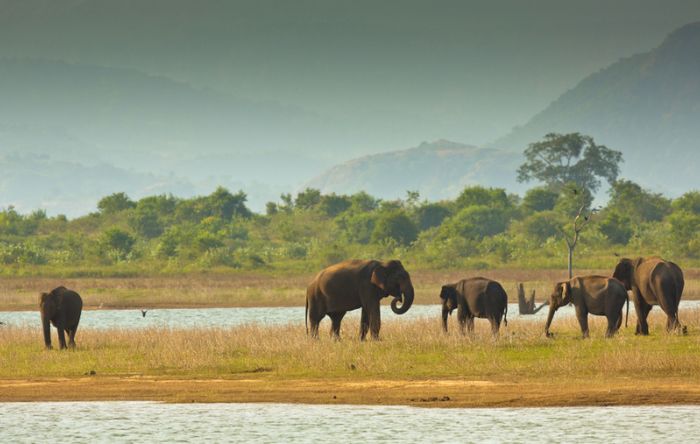
Wild Elephants — Periyar, Kerala: Boat safari on Periyar Lake with wild elephant herds coming to drink at dawn — one of South India's most magical wildlife experiences. Pairs perfectly with Kerala backwater and hill station itineraries.
Complete National Parks Reference Table
|
Park
|
State
|
Star Species
|
Best For
|
Best Time
|
Tiger Sighting Rate
|
|
Ranthambore
|
Rajasthan
|
Bengal Tiger
|
First-timers, Golden Triangle combination
|
Nov–Apr
|
Very High ⭐⭐⭐⭐⭐
|
|
Bandhavgarh
|
Madhya Pradesh
|
Bengal Tiger (highest density)
|
Serious wildlife + photography
|
Feb–May
|
Highest ⭐⭐⭐⭐⭐
|
|
Kanha
|
Madhya Pradesh
|
Tiger, Barasingha
|
Landscape + wildlife combination
|
Nov–May
|
High ⭐⭐⭐⭐
|
|
Jim Corbett
|
Uttarakhand
|
Tiger, Elephant, Birds
|
Birdwatching + Himalayan setting
|
Nov–Jun
|
Moderate ⭐⭐⭐
|
|
Pench
|
Madhya Pradesh
|
Tiger, Leopard
|
Authentic uncrowded experience
|
Nov–Jun
|
High ⭐⭐⭐⭐
|
|
Gir
|
Gujarat
|
Asiatic Lion (only!)
|
ONLY place for wild lions
|
Dec–Mar
|
Very High (Lions) ⭐⭐⭐⭐⭐
|
|
Kaziranga
|
Assam
|
One-Horned Rhino
|
Rhino + elephant safari
|
Nov–Apr
|
Excellent (Rhino) ⭐⭐⭐⭐⭐
|
|
Sundarbans
|
West Bengal
|
Swimming Tigers
|
Unique mangrove boat safari
|
Oct–Apr
|
Low (elusive) ⭐⭐
|
|
Hemis
|
Ladakh
|
Snow Leopard
|
Rare Himalayan wildlife
|
Jan–Mar
|
Low but possible ⭐⭐
|
|
Periyar
|
Kerala
|
Wild Elephants
|
South India wildlife
|
Oct–Mar
|
No tigers — elephants ⭐⭐⭐⭐⭐
|
How India Wildlife Safari Differs from African Safari
This is one of the most frequently asked questions by international guests planning their first India wildlife experience — and the honest answer is more nuanced and more interesting than most travel articles suggest.
Differences That Favour India:
Tiger vs Lion — The Species Advantage India has tigers. Africa has lions. Both are extraordinary — but a Bengal tiger sighting carries a quality of encounter that is genuinely different from an African lion sighting. Tigers are solitary, territorial, and mysterious in a way that lions — social, relatively relaxed, often found in groups — are not. When you see a Ranthambore tiger emerge alone from the forest and walk directly toward your jeep, the intensity of that single encounter is incomparable.
Vehicle Proximity Indian national parks allow safari vehicles to get significantly closer to wildlife than most African reserves. Ranthambore tigers at five metres from an open jeep is a regular occurrence. This proximity — combined with India's habituated tigers who simply do not care about your vehicle — creates photographic and viewing opportunities that many Africa veterans describe as the most intense wildlife encounters of their lives.
Heritage + Wildlife Combination No African safari combines UNESCO World Heritage monuments with wildlife in the way India does. Ranthambore's tigers prowl beneath a 10th-century fort. Bandhavgarh's core zone includes ruined palaces that once housed maharajas. This layering of human history and natural history is uniquely, specifically Indian.
Cost India wildlife safaris are significantly more affordable than equivalent quality African safari experiences. A 5-day private India wildlife safari including luxury lodge accommodation, private jeep safaris, and expert naturalist guides costs approximately one-third to one-half of an equivalent Southern Africa safari.
Species Diversity India is the only country on earth that offers tigers AND lions AND one-horned rhinos AND Asian elephants AND snow leopards — all within one country. No African destination offers this breadth.
Where Africa Has the Advantage:
Savannah Visibility Africa's open savannah landscape makes wildlife consistently visible across long distances. India's dense sal and bamboo forests require more patience and expert tracking — sightings are more intense when they happen, but require more skilled guidance.
Big Five Concentration Africa's classic Big Five (lion, elephant, buffalo, leopard, rhino) are visible together in several parks. India's equivalent species are spread across different parks and different regions of the country.
My honest verdict: An India wildlife safari and an African safari are not comparable — they are complementary. Many of my guests who are experienced Africa safari veterans describe their India wildlife experiences as among the most intense and most moving of their travelling lives — not because India is "better" than Africa, but because it is completely different, in ways that no amount of description fully prepares you for.
Combining Wildlife with Heritage — The Perfect Itinerary
One of India's greatest travel advantages — unique among major wildlife destinations globally — is the seamless combination of world-class wildlife safari with extraordinary cultural and heritage experiences.
The Golden Triangle + Ranthambore Combination
My Most Recommended First-India Itinerary
Sitting in eastern Rajasthan, just a few hours from Jaipur, Ranthambore is the easiest major tiger reserve to combine with a Golden Triangle trip — making it the most popular add-on wildlife destination for first-time visitors to India.
10-Day Golden Triangle + Ranthambore Itinerary:
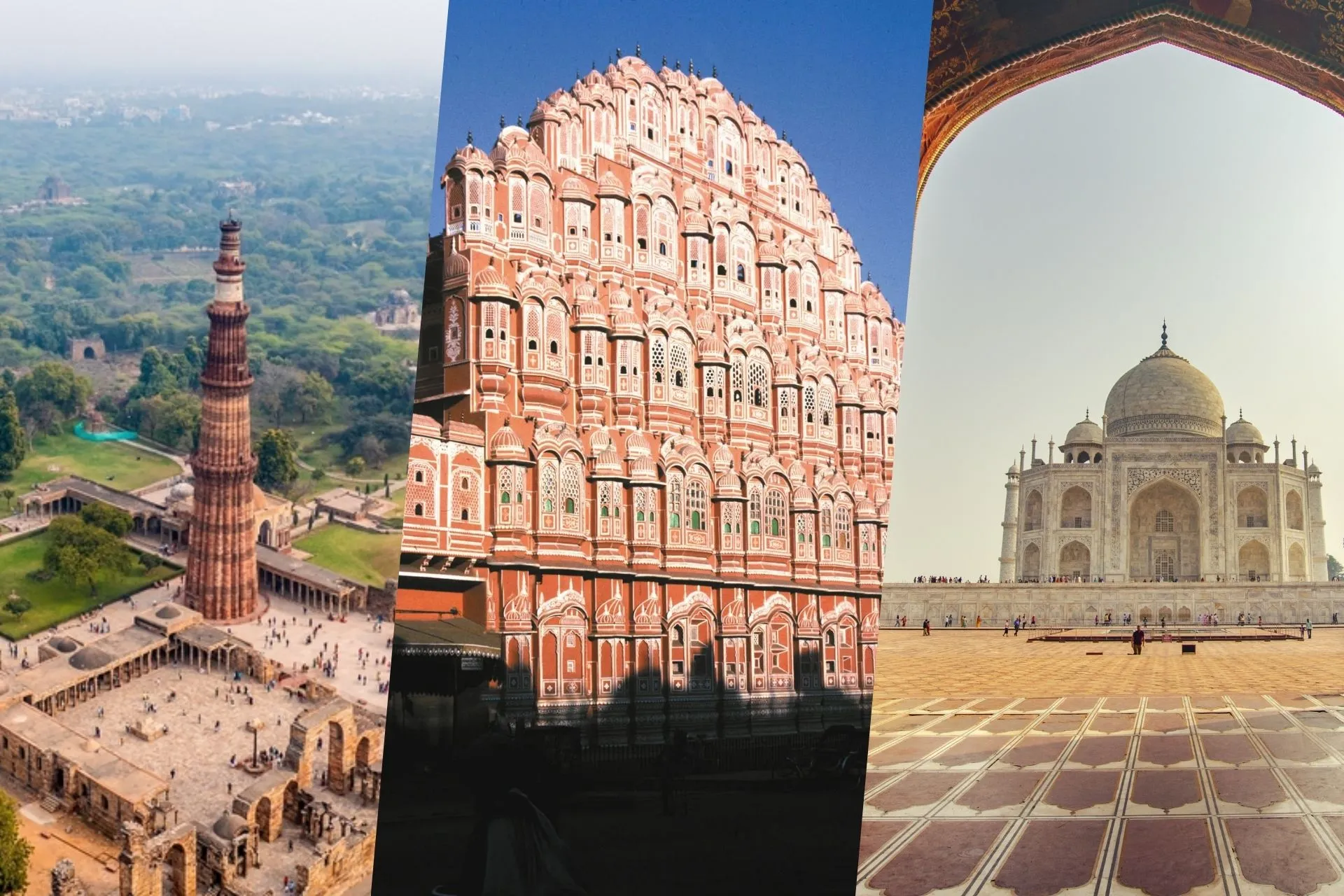
Day 1-2: Delhi — Red Fort, Humayun's Tomb, Qutub Minar, Old Delhi (Chandni Chowk street food tour)
Day 3: Delhi to Ranthambore (5 hours by road) — afternoon zone orientation with naturalist guide
Day 4: Full Ranthambore day — morning tiger safari (Zone 2/3) + evening safari. Ranthambore Fort visible from Zone 3
Day 5: Early morning safari + transfer to Jaipur (3 hours)
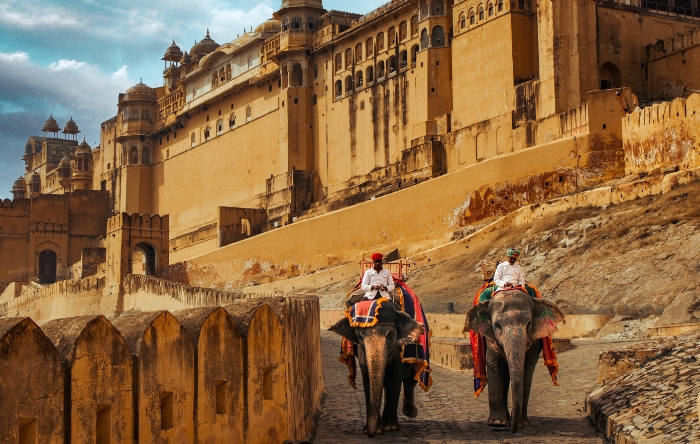
Day 6-7: Jaipur — Amber Fort (Sheesh Mahal), City Palace, Jantar Mantar, Hawa Mahal, Pink City bazaar walk
Day 8: Jaipur to Agra (4 hours by road)
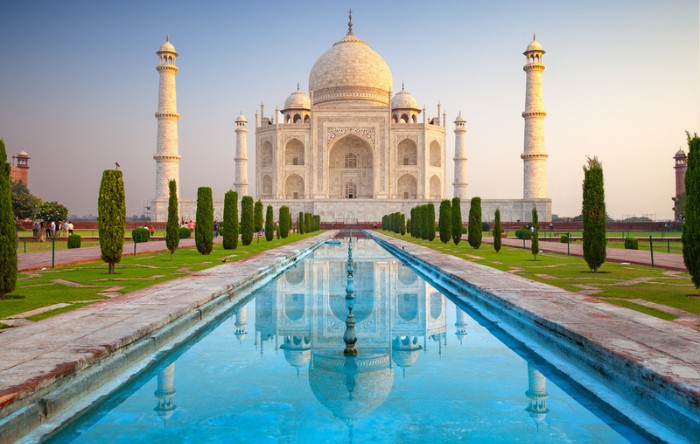
Day 9: Agra — Taj Mahal sunrise, Agra Fort, Mehtab Bagh
Day 10: Agra to Delhi — departure
This single itinerary delivers tigers, the Taj Mahal, royal Rajput forts, and three of India's most extraordinary cities — in ten days.
Conservation Efforts Tourists Should Know
India's wildlife conservation story is one of the most remarkable in the world — and as a tourist visiting India's national parks, you are directly participating in and supporting this story.
Project Tiger — The World's Greatest Conservation Programme: Project Tiger was launched in 1973 with just 9 tiger reserves. Today India has 54 designated tiger reserves across 18 states. The result: India's tiger population has grown from approximately 1,800 in 1972 to over 4,000 in 2026 — a more than doubling in fifty years that represents one of the most significant wildlife recoveries in conservation history.
The Direct Link Between Tourism and Conservation: Safari tourism revenue funds anti-poaching operations, wildlife corridors, forest guard salaries, and community benefit programmes that give local villages financial reasons to support — rather than oppose — tiger conservation. When you book a Ranthambore tiger safari through a responsible operator like My Dream India Tour, your safari fees directly fund the rangers who protect the tigers you are watching.
The Asiatic Lion's Remarkable Recovery: Gir National Park's Asiatic lion conservation story is perhaps the most extraordinary wildlife recovery of the 20th century. From under 20 individuals in 1900 to over 600 in 2026 — this is what determined conservation, community engagement, and responsible ecotourism can achieve together.
Kaziranga's Rhino Guards: Kaziranga National Park employs dedicated armed rangers who operate a zero-tolerance anti-poaching policy. Rhino horn poaching remains a serious threat — but Kaziranga's population has grown from under 200 rhinos in 1905 to over 2,600 in 2026, precisely because of this uncompromising protection effort.
What Tourists Can Do:
- Book through responsible licensed operators (My Dream India Tour works exclusively with certified, ethical safari operators)
- Follow all park rules without exception
- Never offer tips to guides who suggest rule-breaking (getting closer to animals than permitted, etc.)
- Share your experience authentically — your stories and photographs reach millions online and directly drive conservation awareness
How to Book Your India Wildlife Safari
You can book your guided wildlife safari directly with an affordable, expert-led travel agency like My Dream India Tour — and here is exactly why booking through us makes the difference between a good safari and an extraordinary one:
Why Book Wildlife Safari Through My Dream India Tour:
We are Jaipur-based — which means we have on-ground, personal relationships with the finest lodge managers, licensed naturalist guides, and park authority contacts across Ranthambore and beyond. We do not work through intermediaries. We book directly. This means better zone allocations, better guides, and better value for our guests.
Every wildlife safari we arrange includes:
- Pre-booked safari zone permits in the highest-rated zones (Ranthambore Zones 2/3/4 — the prime tiger zones)
- Government-certified, expert naturalist guides specialising in their specific park
- Private open jeep (6 seater) — never shared safaris
- Carefully selected jungle lodge accommodation
- All safari fees and park entry included
- 24/7 WhatsApp support from our Jaipur team
- Seamless combination with Golden Triangle or Rajasthan heritage itinerary
Step-by-Step: How to Book Your Safari with MDIT
Step 1 — Contact Us with Your Dates and Preferences WhatsApp or email our team with your intended travel dates, preferred wildlife parks, group size, and accommodation preferences. We respond within 24 hours with a personalised safari itinerary proposal.
Step 2 — Review Your Custom Safari Itinerary We provide a complete, transparent, all-inclusive quote covering safari permits, jeep hire, naturalist guide, accommodation, and all transfers. No hidden fees. No surprises.
Step 3 — Confirm Your Booking On confirmation, we immediately book your safari zone permits — this is critical for Ranthambore, where prime zone permits sell out 2-3 months in advance for peak season (November to March). We also book your preferred jungle lodge.
Step 4 — Pre-Trip Safari Briefing Every guest receives a detailed pre-safari briefing from our team — covering what to wear, what to bring, what to expect on safari, photography tips, and how to get the most out of every game drive.
Step 5 — Your Safari Your expert naturalist guide meets you at the park gate. Your private jeep is ready. And India's extraordinary wildlife is waiting.
WhatsApp / Call: +91-87695-95984
Email: mydreamindiatour@gmail.com
Website: www.mydreamindiatour.com
View Our Wildlife Safari Packages →
Safari Safety Tips & What to Wear
What to Wear on an India Wildlife Safari
Clothing choices on safari matter more than most first-time guests anticipate. Here is my specific advice from ten years of Ranthambore mornings:
Colours — Neutral is Non-Negotiable: Khaki, olive green, tan, brown, grey, and muted earth tones are ideal. Avoid bright colours — red, yellow, white, bright blue — which can disturb animals and are visible from significant distances in the forest. Never wear white — it is visible, impractical in dust, and signals inexperience to every other guest and guide in the park.
Layers — Essential for Morning Safaris: Dawn safaris begin at 6:00 AM. In November, December, and January, Ranthambore temperatures at that hour can be 8-12°C (46-54°F) in an open jeep at speed. Dress in layers — a thermal base layer, a fleece mid-layer, and a light windproof jacket on top. By 9 AM when the sun is up, you will be removing layers. But the first two hours of a morning safari in January cold are not the time to discover you packed insufficiently.
Fabric — Breathable and Quiet: Cotton and linen layers are ideal. Avoid synthetic fabrics that rustle and crinkle when you move — sound carries in a quiet forest and can alert animals to your presence.
Footwear: Closed-toe shoes or lightweight hiking shoes with grip soles. Sandals leave feet exposed to dust, insects, and the occasional rough terrain when boarding and alighting the jeep. Comfortable, broken-in walking shoes are the practical choice.
Complete Safari Clothing List:
- Khaki or olive lightweight trousers x2
- Long-sleeved neutral-coloured shirts x2
- Fleece mid-layer x1 (November to February)
- Light windproof jacket x1 (November to February)
- Thermal base layer set (December to January only)
- Warm socks x2 pairs (winter mornings)
- Closed-toe walking shoes (broken in)
- Wide-brimmed hat for afternoon safaris
- Sunglasses
- Neutral-coloured daypack
Safari Safety Tips
In the Jeep:
- Never stand up suddenly in the vehicle — tigers and other predators read the vehicle as a single entity. A person standing up changes its shape and can startle an animal that would otherwise remain completely relaxed.
- Do not lean out of the vehicle beyond the roll bars.
- Keep your voice very low — normal speaking volume in a silent forest carries much further than you expect.
- Follow every instruction from your naturalist guide immediately and without discussion.
At the Park:
- Never exit the safari vehicle except at designated rest stops — this is a serious park rule and non- negotiable safety requirement.
- Do not feed any animals — including deer, monkeys, and birds — at any point during or around the safari.
- Photography flash is prohibited in most core zones — use fast lenses and high ISO settings instead.
- Respect the naturalist guide's silence signal absolutely — when a guide signals for quiet, there is usually a very good reason nearby.
Health:
- Apply mosquito repellent (DEET 30%+) before every morning and evening safari — jungle environments have active mosquito populations at dawn and dusk.
- Carry your daily medicine kit in your daypack on safari.
- Drink bottled water throughout — dehydration happens quickly in the combination of early morning cold followed by rising midday heat.
A Final Word — From a Ranthambore Morning
Every India wildlife safari I have guided has been different. Different animals, different moments, different guests — different stories.
But the feeling is always the same. That absolute silence of a stopped engine in the jungle. The distant alarm call that tells every creature in the forest that something extraordinary is about to happen. The moment when the grass parts, and a tiger — three hundred pounds of muscle and amber fur and absolute authority — steps into the open and looks directly at you.
In that moment, nothing else exists. Not the flight over, not the jet lag, not the price of the safari permit, not anything that happened before you arrived in India. Just this. Just now. Just one of the most powerful animals on earth, sharing its world with you for a few extraordinary minutes.
That is what an India wildlife safari gives you.
We would love to help you experience it.
Feel free to reach out with any questions about India wildlife safaris or trip planning. I read and respond to every message personally. Email us at mydreamindiatour@gmail.com or WhatsApp directly at +91-87695-95984. We are always happy to help you plan a safe, extraordinary India wildlife experience.
Plan Your India Wildlife Safari with My Dream India Tour
Wildlife Safari Tours, Rajasthan Tours, Golden Triangle Tours, North India Tours, South India Tours, Same Day Tours
WhatsApp / Call: +91-87695-95984 | +91-70625-12828
Email: mydreamindiatour@gmail.com
Website: www.mydreamindiatour.com
Based in: Jaipur, Rajasthan, India
Rated #186 of 1,161 Tours & Activities in Jaipur — TripAdvisor
© 2026 My Dream India Tour Author: Mukesh Sain, Founder & Senior Tour Guide, Jaipur.
Frequently Asked Questions
Q: Which national park in India is best for tiger safari?
For first-time visitors, Ranthambore is the best national park for tiger safari in India — for three specific reasons. Its tigers are diurnal (active in daylight), its landscape is more open than dense central Indian forests (making sightings clearer and more photogenic), and its location 3 hours from Jaipur makes it the easiest Golden Triangle wildlife combination. For maximum tiger density and the highest raw sighting probability, Bandhavgarh in Madhya Pradesh is the expert's choice.
Q: Where can I see Asiatic lions in India?
Gir is the only place on the entire planet where you can see wild Asiatic lions. Gir National Park in Gujarat is the sole remaining habitat of the Asiatic lion anywhere in the world. With over 600 lions in and around the reserve, lion sighting rates at Gir are excellent. Combine with our Gujarat Tour Package for a complete western India experience.
Q: Which Indian park has one-horned rhinos?
Kaziranga National Park shelters over two-thirds of the entire world population of the Indian One-Horned Rhinoceros — making it the undisputed rhino capital of the planet. Kaziranga in Assam is the definitive destination for one-horned rhino sightings. The morning elephant safari — riding into the tall grass at dawn alongside rhinos — is one of India's most extraordinary wildlife experiences.
Q: How is an India wildlife safari different from an African safari?
The key difference is species and setting. India offers tigers (Africa has lions), one-horned rhinos, Asiatic lions (Africa has African lions), and Asian elephants (Africa has African elephants) — a completely different species set. India's safaris often allow closer vehicle proximity to tigers than African parks permit with lions. India uniquely combines UNESCO World Heritage monuments with wildlife in the same itinerary. Cost-wise, India wildlife safaris are significantly more affordable than equivalent quality African safaris.
Q: Can I combine a tiger safari with the Golden Triangle tour?
Absolutely — and this is our most popular international itinerary. Ranthambore National Park is just 3 hours from Jaipur and 5 hours from Delhi — a perfect road trip addition to the Golden Triangle circuit. A 10-day Golden Triangle + Ranthambore itinerary delivers tigers, the Taj Mahal, Amber Fort, and three of India's greatest cities in a single seamless journey.
Q: What is the best time of year for a wildlife safari in India?
October to April is the best overall window — parks are open, animals are active, and the weather is comfortable. Peak season is November to March, when vegetation has thinned post-monsoon (making animals easier to spot), temperatures are pleasant for safari, and wildlife concentrates around water sources. December and January offer the best photographic light but require warm layers for dawn safaris.
Q: How likely am I to actually see a tiger on safari?
At Ranthambore with well-booked zone permits and an expert guide, tiger sighting rates are genuinely high — our guests see tigers on approximately 75-80% of safari days. At Bandhavgarh, the rate is higher still. However, wildlife is never guaranteed — this is wild India, not a zoo. The uncertainty is part of what makes a sighting so extraordinary when it happens. Two safaris at Ranthambore (morning and evening) on a single day give you the best possible sighting probability.
Q: Is Ranthambore or Jim Corbett better for a first safari?
Ranthambore is better for first-time safari guests for three reasons: higher tiger sighting reliability, more open landscape (easier to see and photograph tigers), and seamless combination with the Golden Triangle heritage circuit. Jim Corbett is better for birdwatchers, those seeking a Himalayan landscape, and travellers combining their safari with Rishikesh or Nainital hill station visits.
Q: What animals can I see besides tigers in Indian parks?
India's national parks are extraordinarily biodiverse. Beyond tigers: leopards (common at Ranthambore and Bandhavgarh), sloth bears (Ranthambore and Kanha), Indian wild dogs / dholes (Kanha and Bandhavgarh), Indian bison / gaur (Kanha and Corbett), sambar and spotted deer (all parks), Indian peacocks (all parks), over 600 bird species at Jim Corbett, crocodiles (Ranthambore lakes), and Indian grey mongoose.
Q: How far is Ranthambore from Delhi or Jaipur?
Ranthambore National Park (Sawai Madhopur) is approximately 180 km from Jaipur (3 hours by road) and 340 km from Delhi (5 hours by road or 4 hours by Rajdhani Express train). My Dream India Tour provides comfortable private AC vehicle transfers from both cities.
Q: Do Indian national parks support conservation efforts?
Yes — directly and significantly. Safari permit fees and lodge revenues fund anti-poaching operations, forest guard salaries, wildlife corridor maintenance, and community benefit programmes. India's tiger population has grown from 1,800 in 1972 to 4,000+ in 2026 directly because of the conservation infrastructure that tourism revenue funds. Booking through a responsible operator like My Dream India Tour ensures your safari fees reach conservation organisations rather than unregulated operators.
Q: What should I wear and bring on an India wildlife safari?
Wear neutral colours only (khaki, olive, tan, grey — never bright colours or white). Pack layers for cold morning safaris (November to March requires thermal base layer + fleece + windproof jacket for 6 AM starts). Bring closed-toe walking shoes, sunglasses, a wide-brimmed hat, sunscreen, insect repellent, a power bank, binoculars, and your camera with the longest available lens. Full packing list above in the safety tips section.

.jpg)











.jpg)
.jpg)
.jpg)



.webp)