What to Pack for India: The Complete International Packing List
(From a Tour Guide Who Has Seen Every Mistake in the Book)
By Mukesh Sain | Founder, My Dream India Tour | Jaipur, Rajasthan Last Updated: 2026 | Reading Time: 12 minutes
Let me be honest with you from the very first line.
In over a decade of guiding international tourists through India — from the golden dunes of Jaisalmer to the marble corridors of the Taj Mahal, from tiger safaris in Ranthambore to dawn boat rides on the Ganges in Varanasi — I have seen every packing mistake imaginable.
I have seen American travellers show up in July in Delhi wearing full denim jeans, sweating through their first fort visit before 9 AM. I have seen British tourists refused entry to one of Rajasthan's most sacred temples because their shoulders were bare. I have watched a German photographer on the trip of a lifetime spend two days hunting for a power adapter in Jodhpur's bazaars because he assumed his European plug would work in India.
And the one that breaks my heart every time: the traveller who spent their first three days of an otherwise perfect India trip in their hotel room with severe stomach illness — because they did not pack the right medicine kit.
I am writing this guide so that none of those things happen to you.
This is not a generic packing list copied from a travel website. This is the exact advice I give every international guest before they fly to India — refined over hundreds of tours, thousands of conversations, and one very important principle: pack smart, pack light, and pack for the India you are actually going to, not the India you imagined.
Let us get into it.
A Quick Note Before We Start — Pack Light
India will tempt you to bring more than you need. Resist. Here is why packing light is especially important for India specifically:
You will almost certainly buy things in India. Rajasthan's markets — block-printed textiles, silver jewellery, leather sandals, ceramic pottery, hand-stitched quilts — are among the finest in the world. Leave room in your bag.
You will be moving between multiple cities — in and out of cars, up and down fort staircases, on and off trains and domestic flights. A heavy bag is a genuine burden.
India is hot. Lightweight clothing is both more practical and more comfortable than the heavy layers most Western tourists instinctively reach for.
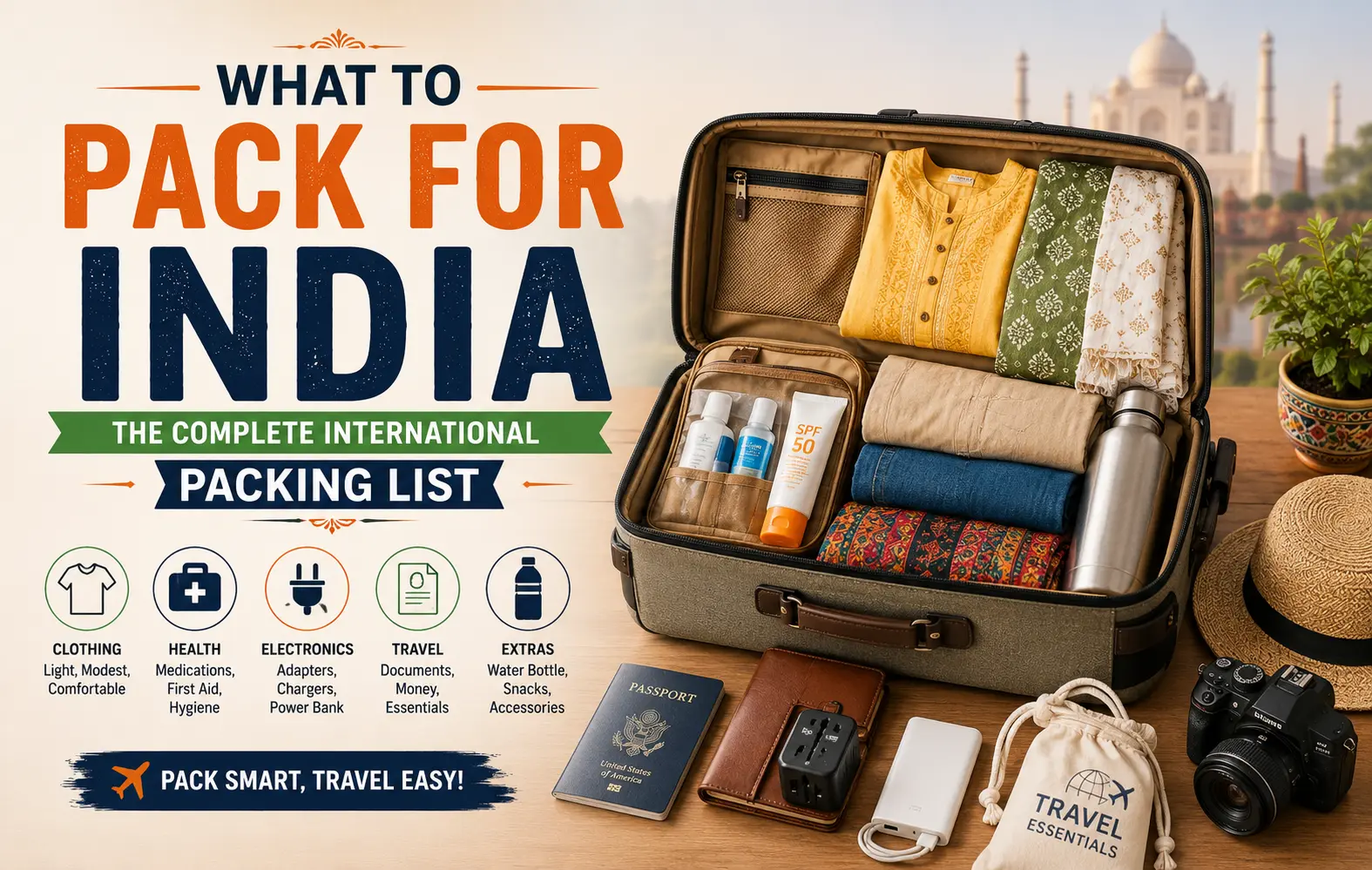
My personal recommendation: one carry-on bag plus one small daypack. That is all you need for up to two weeks in India.
1. What to Wear in India — Clothing That Works
What Should a Western Tourist Wear in India to Respect Local Culture?
This is the question I am asked most often — and it is the right question to ask, because getting the clothing balance right makes your India experience significantly smoother, more comfortable, and more respectful.
India is a culturally conservative country in most public and religious spaces — but it is also a hot country where light, breathable clothing is essential. The key is finding the overlap between these two realities.
The Golden Rule for India clothing: Cover your shoulders and knees in temples, mosques, and religious sites. Everywhere else, dress lightly and comfortably.
Here is what I recommend packing:
For Women:
- 3 to 4 loose, lightweight linen or cotton tops — long enough to cover the hips, with at least short sleeves. Loose-fit is more comfortable and more culturally appropriate than fitted.
- 2 pairs of loose, lightweight trousers or palazzo pants — linen or cotton, not synthetic. These are cooler than jeans and perfect for temple visits.
- 1 lightweight kurta (Indian-style long tunic) — buy one in Jaipur's markets on Day 1. They are inexpensive, beautiful, and genuinely the most comfortable thing you can wear in Rajasthan's heat.
- 1 light cotton dress (knee-length minimum) — for evenings, restaurants, and hotel downtime.
- 1 pair of lightweight leggings — versatile, pack flat, great for early morning fort visits in cooler months.
For Men:
- 3 to 4 lightweight cotton or linen shirts — collared or casual. Avoid polyester — it traps heat and does not breathe.
- 2 pairs of lightweight chino or linen trousers — these are the workhorse of your India wardrobe. Versatile for temples, restaurants, and sightseeing.
- 1 pair of shorts — fine for beaches, hotels, and casual outdoor activities (more on this below).
- 1 smart casual outfit — for nicer restaurants or heritage hotel dinners.
Colours: Avoid white if possible — India's dust, unpaved paths, and immersive food culture means white clothes require constant laundering. Mid-tones — navy, grey, khaki, olive — are practical and look good throughout a long trip.
Can I Wear Shorts and Tank Tops in India?
Shorts and tank tops are fine in certain contexts — but understanding where they are appropriate and where they are not is essential.
Where shorts and tank tops ARE fine:
- Your hotel pool, beach, or resort
- Goa's beaches and beach towns
- Kerala's coastal areas
- Casual outdoor restaurants and cafes
- Hiking and nature walks
Where shorts and tank tops ARE NOT appropriate:
- Temples, mosques, gurudwaras, and all religious sites — this is non-negotiable. You will simply be refused entry.
- Fort interiors that contain active temples (Amber Fort, Mehrangarh, Chittorgarh — all have active shrines inside)
- Rural villages and conservative market areas
- Formal heritage hotel dining rooms
My honest advice: pack one pair of shorts for downtime and leisure. For sightseeing days — particularly in Rajasthan and North India — lightweight loose trousers are always the right choice and only marginally warmer than shorts in a good linen.
Do I Need to Pack a Scarf or Shawl for India?
Yes — absolutely. This is one of the most useful items you will pack.
A lightweight cotton or linen scarf or pashmina is genuinely multi-purpose in India:
At religious sites — drape over your shoulders and head when entering mosques, gurudwaras, and some Hindu temples that require head coverings. Many sites provide coverings at the entrance, but having your own is more comfortable and more hygienic.
Sun protection — India's sun is intense, especially in Rajasthan from October to April. A light scarf over your neck and shoulders on fort walks and outdoor sightseeing prevents significant sunburn.
Dust and air quality — covering your nose and mouth with a scarf in Old Delhi's Chandni Chowk or Jaipur's bazaars reduces exposure to dust, particularly for those with respiratory sensitivities.
Cold nights and early mornings — December and January nights in Rajasthan can be genuinely cold (8–12°C / 46–54°F). A warm scarf or pashmina in your daypack is essential.
Airline blanket substitute — long flights and aggressively air-conditioned Indian domestic flights make a warm scarf indispensable.
My recommendation: pack one lightweight cotton scarf for warm months (October–March) and one warmer pashmina for December–January travel. Or — and this is what most of my guests do — buy a beautiful Pashmina shawl in Jaipur's Johari Bazaar on Day 1 of your trip. You will use it every day and it makes a perfect memento of your India journey.
2. The Best Shoes for India
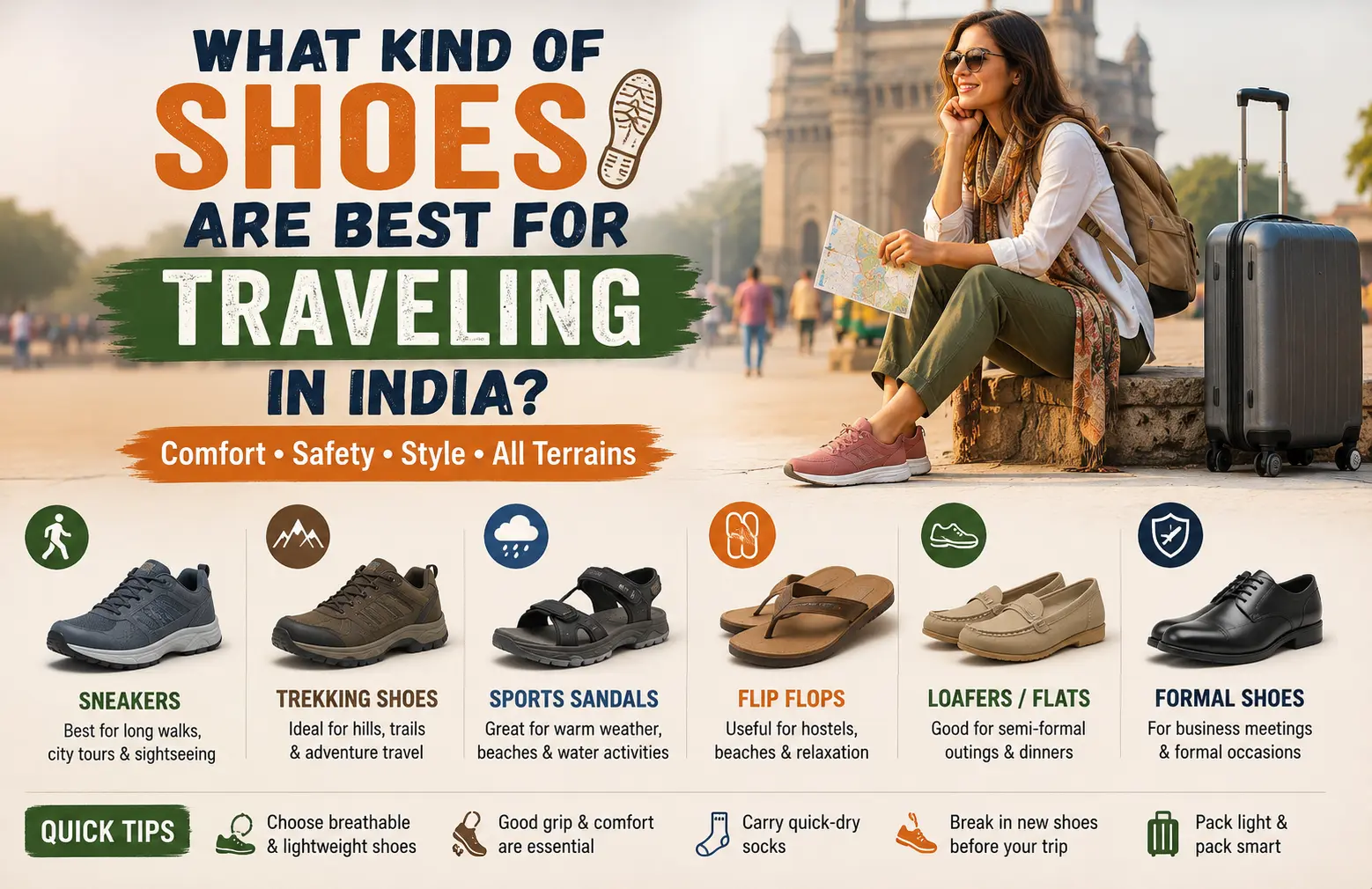
What Kind of Shoes Are Best for Traveling in India?
After ten years of watching international tourists struggle with the wrong footwear in India — blistered heels from brand-new sandals, ruined leather shoes from monsoon puddles, gym trainers that cannot be slipped off at temple entrances — I have very specific views on this.
My top recommendations:
1. Slip-on sandals or closed-toe shoes (Most Important) India's temples, mosques, and many historic sites require you to remove your shoes at the entrance. This happens dozens of times across a typical India tour. Shoes with laces become genuinely tedious by Day 3 — especially when the floor outside is hot or wet and the queue is long.
A quality pair of Birkenstock-style sandals or slip-on leather sandals are the single most practical India footwear choice. They look good, breathe well in the heat, and slip off and on in seconds at every monument entrance.
2. Lightweight walking trainers/sneakers For fort walks, wildlife safaris, and day hikes — a pair of lightweight, well-worn trainers with good grip. NOT new shoes. Bring shoes you have already broken in. India's fort cobblestones and uneven stone paths are brutal on feet in stiff new footwear.
3. Flip-flops (For Hotel and Beach) Lightweight, pack flat, and essential for hotel pools and Goa/Kerala beach days. Do not use them for sightseeing — they provide no arch support and become uncomfortable on long walking days.
What NOT to bring:
- Brand new shoes of any kind — break them in before you arrive
- Heavy hiking boots (unless specifically trekking in the Himalayas)
- White trainers or canvas shoes — they will not survive India's dust and streets looking clean for more than 12 hours
- High heels — impractical on every surface India offers
One practical tip: Buy a pair of Kolhapuri sandals or leather chappals (Indian sandals) in Jaipur's Bapu Bazaar on Day 1. They cost ₹300–800 ($4–10 USD), are made for India's terrain and heat, and are extraordinarily comfortable. Half my guests end up wearing them for the rest of their trip.
3. The Medicine Kit — Your Most Important Packing Decision
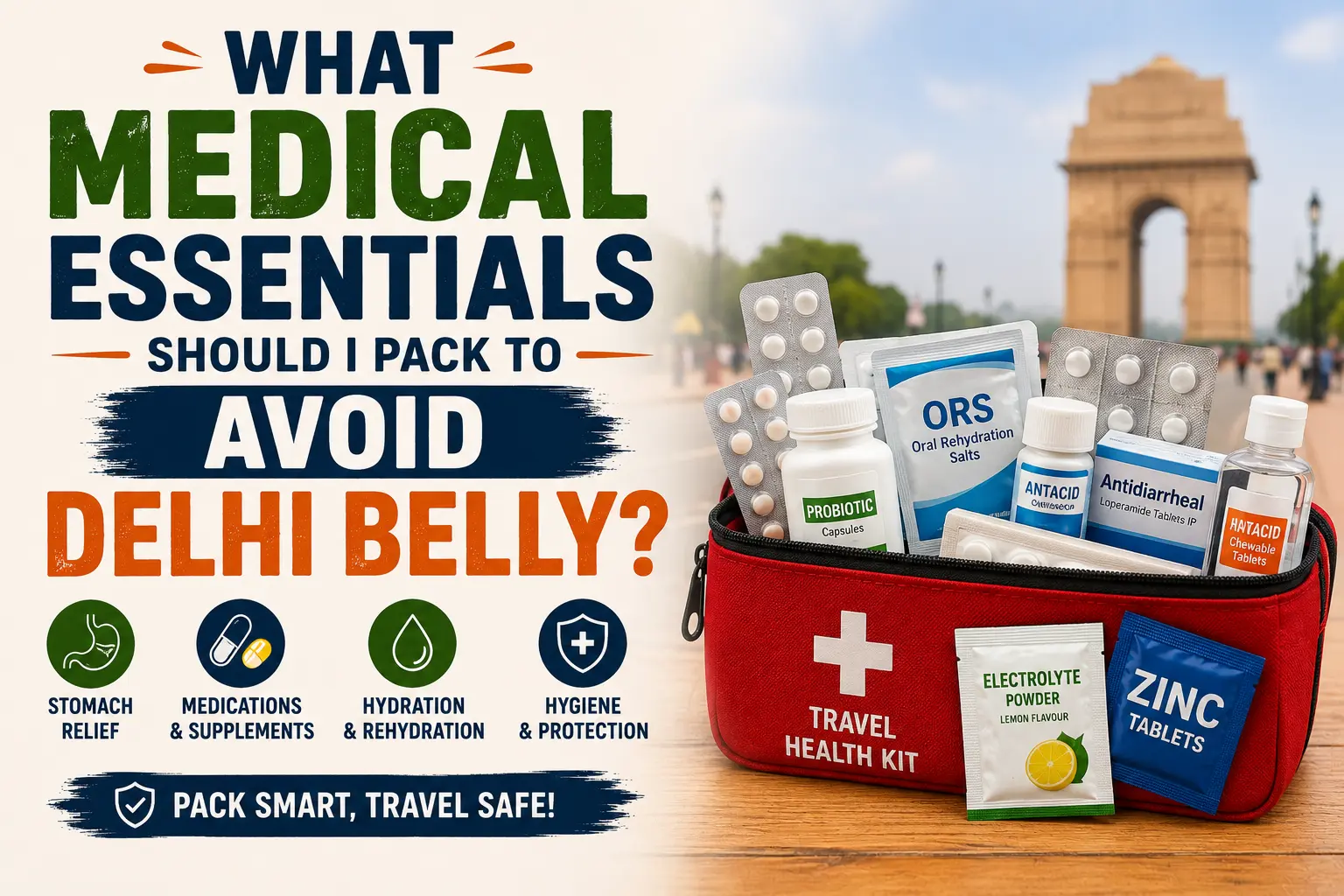
What Medical Essentials Should I Pack to Avoid "Delhi Belly"?
I am going to be very direct here — because this topic directly affects the quality of your India trip more than almost any other single packing decision.
"Delhi Belly" — traveller's diarrhoea caused by consuming food or water containing unfamiliar bacteria — affects a significant percentage of first-time India visitors. It is not inevitable, it is not a reason to avoid India, and with the right preparation it is entirely manageable. But arriving in India without the right medicine kit is the travel equivalent of driving without a seatbelt.
The essentials — pack all of these:
1. Oral Rehydration Salts (ORS) — Non-Negotiable If you experience stomach illness in India, dehydration is the real danger — not the illness itself. ORS sachets (like Dioralyte or Pedialyte) restore electrolytes and prevent the exhaustion and weakness that makes stomach illness feel so debilitating. Pack 10 sachets minimum. These are lightweight and take up almost no space.
2. Antidiarrhoeal medication (Imodium / Loperamide) Not to be taken at the first sign of loose stools — mild stomach upset is the body's natural response to new bacterial environments and should be allowed to run its course. But for an unavoidable long journey or a must-see day that cannot be postponed, Imodium is essential. Consult your doctor before departure for dosage guidance.
3. Antibiotics (Prescribed by your doctor before travel) Speak to your GP or travel medicine doctor before leaving home and ask about a course of antibiotics for traveller's diarrhoea as an emergency standby. Azithromycin or Ciprofloxacin are commonly prescribed for India travel — but must be obtained on prescription in the USA, UK, Canada, and Germany. This single item has saved more India trips than anything else I can think of.
4. Water purification tablets or a SteriPen UV purifier Tap water in India is not safe to drink for foreign visitors — your gut simply does not carry the immunity to India's water bacteria that Indian residents develop over a lifetime. Always drink bottled water (provided on all My Dream India Tour itineraries) or water purified with tablets or a UV purifier. Even brushing teeth with tap water is best avoided in your first week.
5. Mosquito repellent — High DEET (30–50%) India has mosquito-borne illnesses including Dengue fever and Malaria in certain regions and seasons. A high-DEET repellent (DEET 30–50%) applied to exposed skin at dusk and dawn is essential — particularly in Rajasthan from July to October and in any forested or wetland area year-round. It can get pretty humid in parts of India, and with humidity comes mosquitoes.
6. Antihistamine (Cetirizine / Loratadine) India's dust, pollen, and incense-rich temple environments can trigger allergic reactions in visitors who have never experienced these conditions before. A non-drowsy antihistamine is a lightweight, low-cost insurance policy.
7. Antacids (Rennie / Tums) North Indian food — particularly the rich, ghee-laden Rajasthani cuisine — can cause indigestion in visitors not accustomed to it. Antacids are small, lightweight, and very useful after an enthusiastic Laal Maas meal in Jodhpur.
8. Paracetamol / Ibuprofen For headaches, mild fever, and the general physical protests that long travel days occasionally produce. Available in India but bring your preferred brand from home.
9. Sunscreen SPF 50+ India's sun — particularly in Rajasthan and between March and October — is significantly stronger than most Western visitors are accustomed to. A high-SPF sunscreen applied before every outdoor sightseeing session is essential. Quality SPF 50+ is available in Indian pharmacies (look for Neutrogena or Lotus brands) but costs significantly more than at home.
10. Lip balm with SPF Often overlooked but genuinely useful in Rajasthan's dry desert climate. Your lips will thank you.
Before You Leave Home — Visit a Travel Medicine Clinic: I strongly recommend booking an appointment with a travel medicine specialist 6 to 8 weeks before your India departure. They will advise on recommended vaccinations for India (Hepatitis A, Typhoid, and Tetanus are commonly recommended), prescription medications, and current health advisories. This is the single most important pre-trip preparation step after applying for your visa.
4. Power Adapter & Electronics
What Power Adapter Plug Type Is Used in India?
This is the question that catches more international tourists off-guard than almost any other — and it has an easy solution once you know the answer.
India uses Type C, Type D, and Type M power plugs with a standard voltage of 230V at 50Hz.
Here is what that means for visitors from different countries:
|
Your Country
|
Your Plug Type
|
Do You Need an Adapter?
|
|
USA / Canada
|
Type A (2 flat pins)
|
YES — essential
|
|
UK
|
Type G (3 rectangular pins)
|
YES — essential
|
|
Germany / France / EU
|
Type C/F (2 round pins)
|
Sometimes — Type C may work in some sockets
|
|
Australia
|
Type I (2/3 flat pins)
|
YES — essential
|
The most important thing to understand:
US Type A/B plugs will not physically fit into Indian outlets, so packing the right adaptor is essential before your trip. UK Type G plugs have three large rectangular pins and are physically too large for standard Indian sockets.
My specific recommendations:
Best option: Universal travel adapter with USB ports You have three options for buying an adapter for Indian plug types — buy before you leave (the easiest option, available online from Amazon for £10–£30), buy at the airport, or buy in India. I strongly recommend buying before you leave — airport adapters cost two to three times more, and arriving in Delhi at midnight with dead devices because you forgot an adapter is a genuinely miserable experience I have witnessed too many times.
Buy a universal travel adapter with 2 to 3 USB ports and a Type C port. This single device will charge your phone, camera, and laptop simultaneously — and work in every country you might visit before or after India.
Voltage note: India's standard voltage is 230V at 50Hz. Most modern laptops, phones, and camera chargers are dual-voltage (100–240V) and only need a plug adapter, not a voltage converter. Check the fine print on your charger — if it says "Input: 100–240V," you are fine with just an adapter. If it says "Input: 110V only" — which is rare but possible with some older American appliances — you also need a voltage converter.
Power quality in India: Power quality in India has improved substantially over the past decade, but voltage fluctuations and brief power cuts still occur in some regions, particularly in rural areas and smaller cities. If you are travelling with sensitive electronics such as a CPAP machine or medical equipment, a small surge protector is worthwhile.
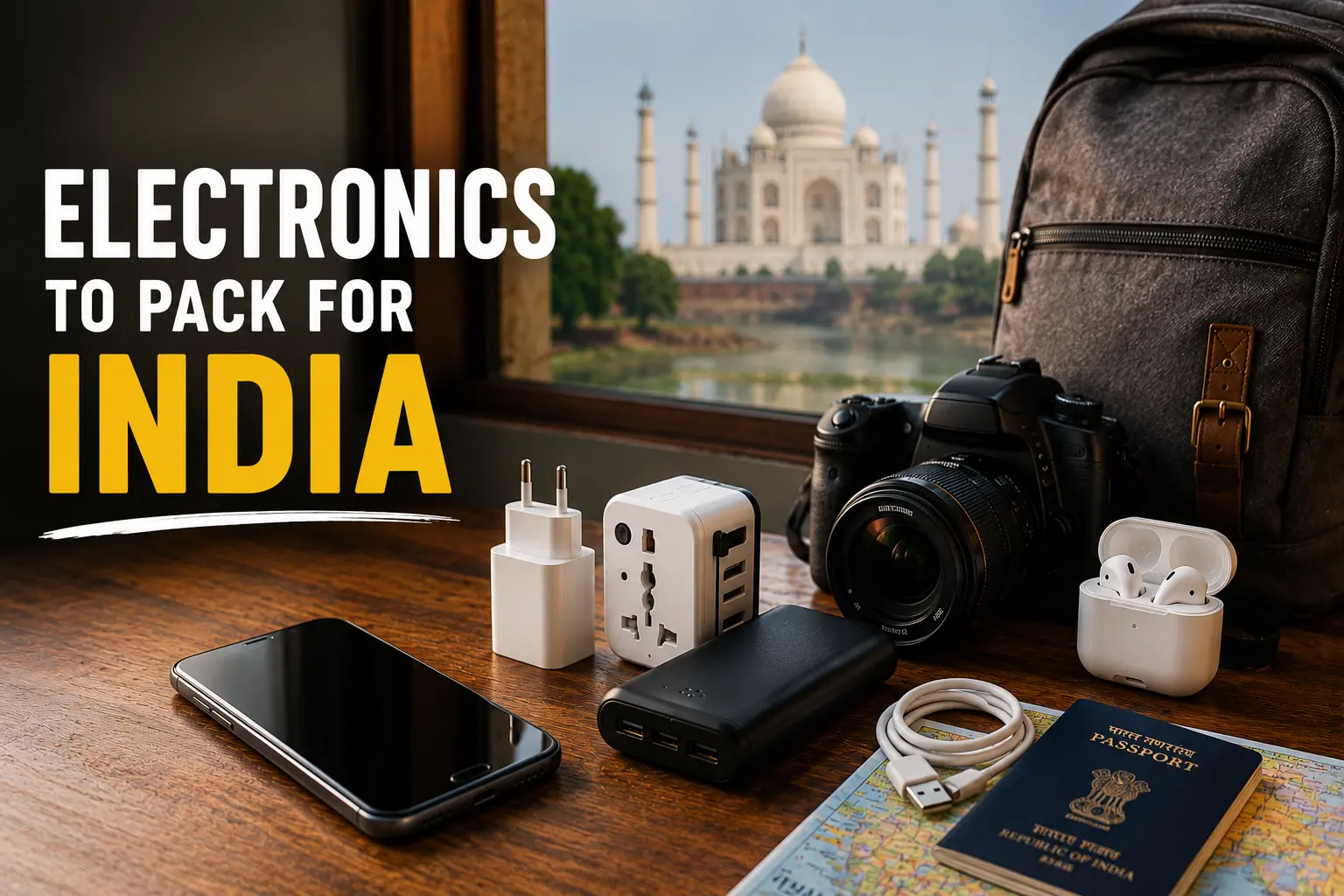
What Essential Electronics Should an International Tourist Pack for India?
Here is my recommended electronics list — prioritised by genuine usefulness:
Must Have:
- Universal travel adapter (with USB ports) — as above
- Unlocked smartphone — for Google Maps, translation, photos, and WhatsApp (buy a local Indian SIM card on arrival at the airport — Airtel and Jio both offer tourist SIM cards with data)
- Portable power bank (20,000 mAh minimum) — India's monument visits and long car journeys drain phone batteries fast. A high-capacity power bank is one of the most useful things you will pack.
- Camera (mirrorless or DSLR if photography is important) — India is one of the world's great photography destinations. If you care about photography, bring proper equipment. Memory cards, spare batteries, and a cleaning kit are essential.
Highly Recommended:
- Noise-cancelling earbuds or headphones — for long drives between cities and overnight trains
- Kindle or e-reader — India's long car journeys and quiet fort afternoons create perfect reading time
- Laptop or tablet — if you need to work; otherwise, a smartphone is sufficient for most travellers
Leave at Home:
- Expensive jewellery or irreplaceable electronics — not because India is unsafe, but because dust, humidity, and the general physicality of India travel means things get damaged, lost, and broken
- Hair dryer (most hotels provide one)
- Travel iron (hotels have these; dry-clean services are cheap)
5. Packing Differently for North vs South India
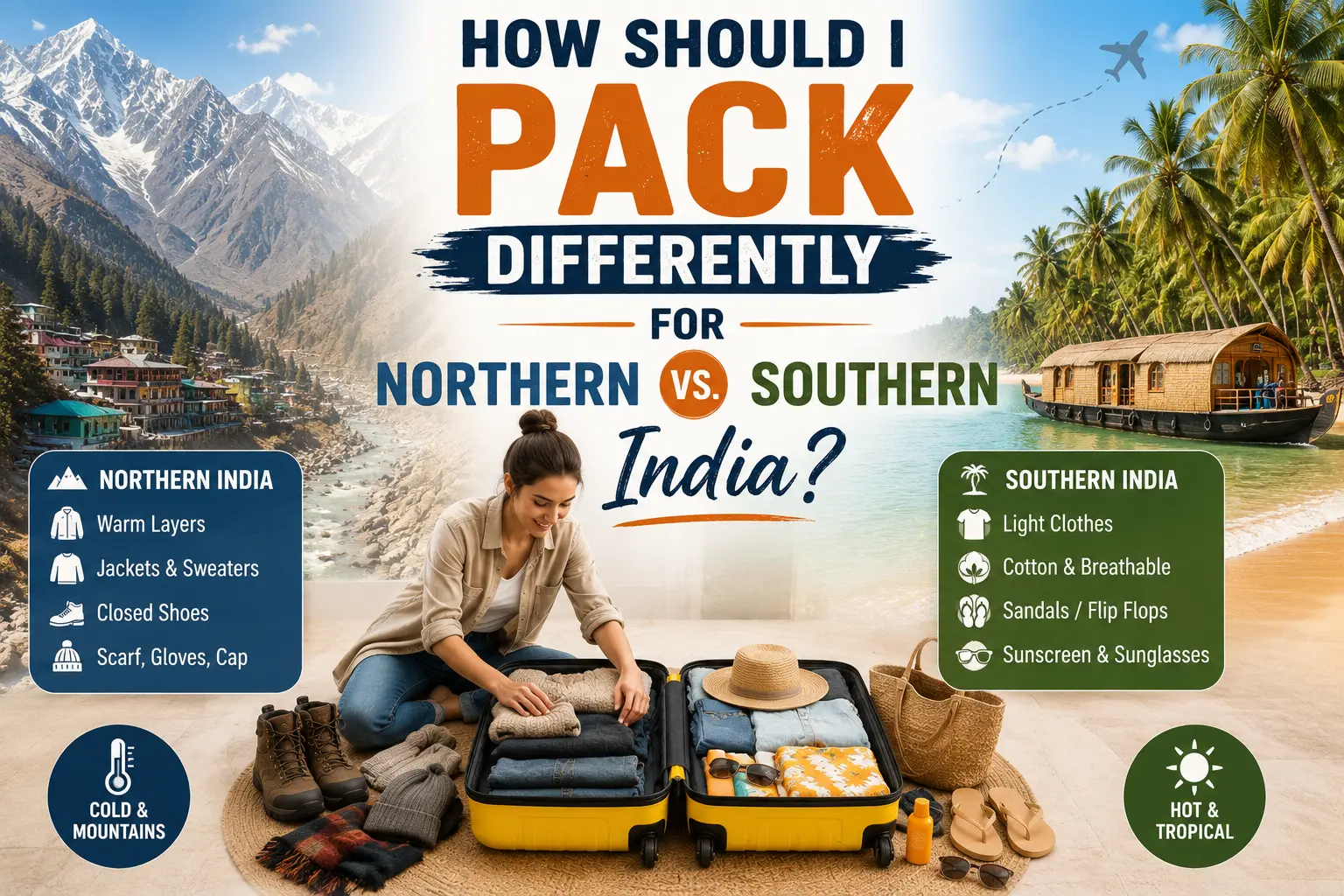
How Should I Pack Differently for Northern vs. Southern India?
This is an excellent question — and the answer varies significantly by season and region.
Packing for North India (Rajasthan, Delhi, Agra, Jaipur):
October to February (Peak Season):
- Days: Light layers — a cotton shirt or light jacket over your usual sightseeing outfit
- Evenings: A proper warm layer is essential — December and January nights in Jaisalmer and Jaipur can drop to 8°C (46°F). Pack a light down jacket or a thick fleece.
- Accessories: Warm scarf (pashmina), gloves for early morning wildlife safaris
March to May:
- Pure lightweight cotton or linen — nothing else
- Wide-brimmed hat is essential — the sun on Rajasthan's white marble and sandstone is intense
- SPF 50+ sunscreen — apply generously and often
June to September (Monsoon):
- Quick-dry clothing — cotton is comfortable but slow to dry in humidity. Lightweight quick-dry shirts are practical.
- Compact umbrella or packable rain jacket
- Waterproof bag covers or dry bags for electronics
Packing for South India (Kerala, Tamil Nadu, Karnataka):
South India's tropical climate means:
- Lightweight, breathable clothing year-round
- More shorts and lighter fabrics than North India (beach culture is more accepted in Kerala and Goa)
- Sandals are more appropriate as the primary footwear
- Rain jacket or compact umbrella if visiting June–September (South India's monsoon is beautiful but very wet)
- Insect repellent is more important in South India's humid coastal and forested environments than in Rajasthan's desert
Temperature Quick Reference:
|
Region
|
Oct–Feb
|
Mar–May
|
Jun–Sep
|
|
Delhi / Agra
|
8–22°C (46–72°F)
|
28–42°C
|
28–38°C + rain
|
|
Rajasthan
|
8–25°C (46–77°F)
|
30–45°C
|
28–38°C
|
|
Kerala
|
25–32°C (77–90°F)
|
28–35°C
|
24–32°C + heavy rain
|
|
Tamil Nadu
|
22–30°C (72–86°F)
|
30–38°C
|
28–34°C
|
6. Your Daypack — What to Carry Every Day
What Should Be in a Tourist's Daypack While Exploring Indian Cities?
After a decade of guiding tourists through India's cities, forts, and markets, here is what I would put in your daypack for every single sightseeing day:
The Daily Daypack Essentials:
- 2 x 500ml bottles of water — minimum. Hydration is the most underestimated need for first-time India tourists. All My Dream India Tour vehicles carry additional bottled water, but always have your own supply in your daypack.
- Power bank — fully charged every morning. Your phone GPS, camera, and Google Translate will all drain the battery faster than you expect.
- Small medicine pouch — ORS sachet x2, Imodium x2, paracetamol x2, antihistamine x1. Lightweight insurance for the day.
- Scarf or light pashmina — for temple entries, sun protection, and a surprisingly cold air-conditioned restaurant at lunch.
- Hand sanitiser and wet wipes — India's public toilets and street food experiences make these genuinely essential. Baby wipes are also invaluable for dusty fort visits.
- Sunscreen SPF 50+ — for reapplication during the day.
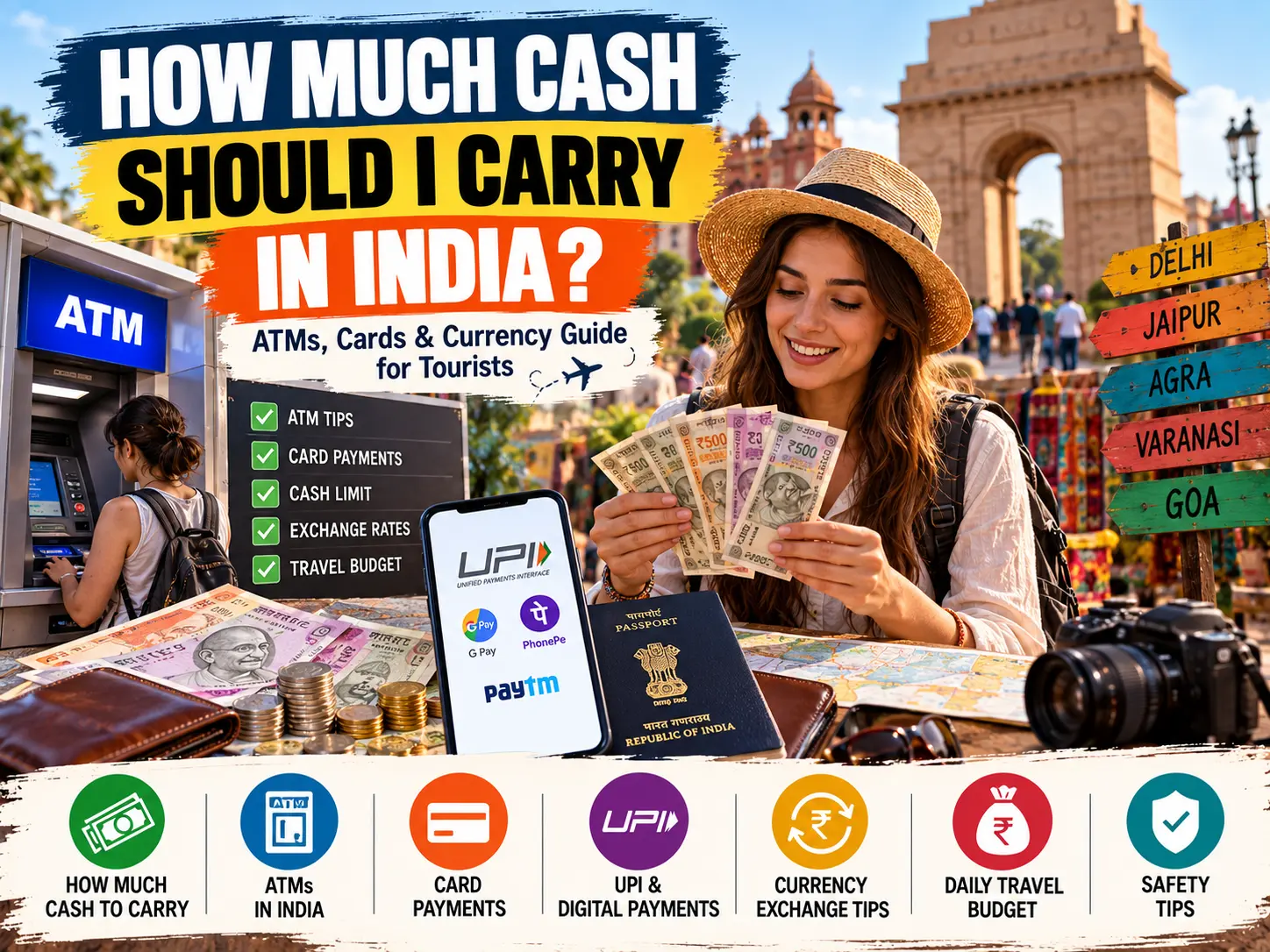
- Cash (Indian Rupees) — carry ₹2,000–₹3,000 in small notes (₹100 and ₹200) for tips, small market purchases, temple donations, and the occasional entry fee. Card payments are not always accepted at smaller monuments and local stalls.
- Sunglasses — essential for Rajasthan's intense sun.
- Small lock — for securing your daypack on rickshaws and at crowded monuments.
- Ziplock bags — for wet umbrellas, used tickets, and the dusty souvenirs you accumulate throughout the day.
Leave in the hotel safe:
- Your passport (carry a printed photocopy instead)
- Excess cash
- Laptop
- Spare camera equipment
7. Travel Documents — Digital or Printed?
Do I Need to Print My Travel Documents for India, or Is Digital Okay?
This is a question I get from almost every tech-savvy international guest — and my answer is always the same:
Both. Always both.
Here is the India-specific reality:
Your India e-Visa (ETA) — Print Is Essential Indian immigration authorities and airline check-in counters routinely request a printed copy of your Electronic Travel Authorization (ETA). A digital copy on your phone is useful as backup, but you will be asked for the physical printout. Print 2 copies — one in hand luggage, one in checked bag.
Hotel Bookings — Both Luxury and heritage hotels in Rajasthan almost always check you in digitally. But budget guesthouses, B&Bs in smaller towns, and any accommodation that experiences power cuts (more common outside major cities) may need a printed confirmation. Having printed hotel bookings has saved my guests embarrassment at late-night check-ins more than once.
Travel Insurance — Print If you need to use your travel insurance in India — for medical treatment, a cancelled tour, or a lost bag — having the printed policy document and emergency contact number in your daypack is far more useful than hunting for the app on a low-battery phone.
Flight tickets and itinerary — Both Your My Dream India Tour itinerary document — with all your hotel addresses, contact numbers, and daily schedules — should be printed and in your daypack from Day 1. When you are standing in an Agra street trying to communicate your hotel address to a rickshaw driver at 10 PM, a printed paper is infinitely more useful than a phone screen.
Passport — Carry the original in a secure money belt or hotel safe, and carry a printed photocopy in your daypack for day-to-day use at monuments (some forts and museums request ID at entry).
The Master Packing Checklist — India 2026
Print this list and tick it off before you leave:
Clothing
- 4 lightweight cotton/linen tops (loose fit)
- 2 pairs lightweight linen/cotton trousers
- 1 pair shorts (for leisure/beach)
- 1 light dress or smart casual outfit
- 1 warm layer (fleece/light down — Oct–Feb travel)
- 1 rain jacket (compact, packable)
- Undergarments x7
- Socks x4 pairs (light cotton)
- Scarf or pashmina x2
Footwear
- Slip-on sandals or comfortable walking shoes
- Lightweight trainers (broken in)
- Flip-flops (1 pair)
Medicine Kit
- Oral Rehydration Salts (ORS) x10 sachets
- Imodium (Loperamide) — doctor-advised quantity
- Prescribed antibiotic (standby — consult doctor)
- Antihistamine (cetirizine — 14 tablets)
- Antacids (Rennie / Tums — 20 tablets)
- Paracetamol / Ibuprofe
- Mosquito repellent — DEET 30–50%
- Sunscreen SPF 50+ (large bottle)
- Lip balm SPF 30
- Hand sanitiser x2 (small bottles)
- Wet wipes / baby wipes (travel pack)
- Prescription medicines (enough for trip + 7 days extra)
- Travel insurance documents (printed)
Electronics
- Universal travel adapter (with USB ports) — TYPE D
- Portable power bank (20,000 mAh)
- Unlocked smartphone
- Camera + memory cards + spare battery
- Charging cables (phone, camera, laptop)
- Noise-cancelling earbuds/headphones
Documents
- Passport (valid 6+ months beyond arrival date)
- India e-Visa / ETA — 2 printed copies
- Flight tickets — printed + digital
- Hotel bookings — printed + digital
- Travel insurance — printed policy + emergency number
- My Dream India Tour itinerary — printed copy
- International Driving Permit (if self-driving)
- Passport photocopy x2 (for daily use)
- Emergency contacts printed card (in daypack)
Daypack Contents (Every Day)
- 2 x water bottles (500ml)
- Power bank (charged)
- Daily medicine pouch (ORS, Imodium, paracetamol)
- Scarf/pashmina
- Hand sanitiser + wet wipes
- Sunscreen
- Cash (₹2,000–3,000 in small notes)
- Sunglasses
- Printed day's itinerary
One Final Word — From My Experience
I have guided hundreds of international guests through India — from first-time visitors arriving in Delhi with a mix of excitement and mild terror, to seasoned world travellers who thought they had seen everything until India changed their perspective completely.
In every case, the guests who had the best experiences were the ones who prepared thoughtfully, packed practically, and arrived with an open heart. India will surprise you. It will overwhelm you at moments. It will move you in ways you did not expect.
But it will not defeat you if you are prepared.
Pack the medicine kit. Buy the travel adapter before you leave. Bring the scarf. Wear the comfortable shoes.
And then let India do what it does better than anywhere else on earth: show you something extraordinary around every single corner.
I look forward to welcoming you to Jaipur.
— Mukesh Sain Founder, My Dream India Tour Jaipur, Rajasthan, India
Plan Your India Tour with My Dream India Tour
We are a Jaipur-based private tour operator specialising in fully customised India packages for international travellers from the USA, UK, Canada, France, Germany, and beyond.
Every guest receives:
- Pre-trip packing guidance and India travel briefing
- Private AC vehicle for all transfers
- Licensed English-speaking local guides
- 24/7 WhatsApp support throughout
- Bottled water provided daily on all tours
- Rated #186 of 1,161 Tours in Jaipur — TripAdvisor ⭐⭐⭐⭐⭐
Explore our tours: Rajasthan Tours, Golden Triangle Tours, North India Tours, South India Tours, Wildlife Safari Tours
WhatsApp / Call: +91-87695-95984
Email: mydreamindiatour@gmail.com
Website: www.mydreamindiatour.com
Have a packing question that this guide did not answer? Feel free to reach out — I read and respond to every message personally.
You can email us at mydreamindiatour@gmail.com or WhatsApp us directly at +91-87695-95984. We are always happy to help you plan a safe, comfortable, and truly unforgettable India journey.
© 2026 My Dream India Tour | mydreamindiatour.com Author: Mukesh Sain, Founder & Senior Tour Guide, Jaipur.

.jpg)








.jpg)
.jpg)
.jpg)



.webp)