North India vs. South India: Which Should You Visit First? (2026 Honest Guide)
India is a country so vast, so diverse, and so layered with history and culture that choosing where to go — especially on a first visit — can feel genuinely overwhelming. And at the heart of almost every India trip planning conversation is the same fundamental question:
North India or South India — which should I visit first?
It is one of the most searched India travel questions in the USA, UK, Canada, France, and Germany — and for good reason. The two regions of India are so different from each other that they almost feel like separate countries. North India is about grand monuments, Mughal history, and Himalayan adventures. South India is about tranquil backwaters, Dravidian temples, and spice-laden cuisine.
There is no single right answer — the best choice depends entirely on who you are as a traveller, what you most want to experience, and how much time you have. What this guide gives you is an honest, detailed, category-by-category comparison of both regions — so you can make the most informed decision about your India journey.
At My Dream India Tour, we have guided thousands of international travellers through both regions — and we will give you the same honest advice we give every guest who asks us this question.
The Quick Answer — North India vs South India
Before we go deeper, here is the short version:
|
You Should Visit North India First If...
|
You Should Visit South India First If...
|
|
You want iconic monuments (Taj Mahal, forts)
|
You want a gentler, less overwhelming start
|
|
It is your first time in India ever
|
You are a repeat visitor to India
|
|
You love history, Mughal architecture, Rajput forts
|
You love nature, temples, backwaters, beaches
|
|
You want maximum sightseeing in minimum time
|
You want slower, more immersive travel
|
|
You are travelling October–March
|
You are flexible on season
|
|
You have 7–14 days
|
You have 10–21 days
|
|
You are combining with Rajasthan
|
You want yoga, wellness, tropical beauty
|
My Dream India Tour Recommendation: For most international first-time visitors from the USA, UK, Canada, Germany, and France — start with North India, specifically the Golden Triangle (Delhi, Agra, Jaipur). It delivers the most iconic India experiences in the shortest time, with the best tourist infrastructure and the most recognisable landmarks. Then plan a return visit for South India — because once you have fallen in love with India in the north, the south will pull you back.
1. Culture & Heritage — North India vs South India
North India: Imperial Grandeur, Mughal Splendour, Rajput Royalty
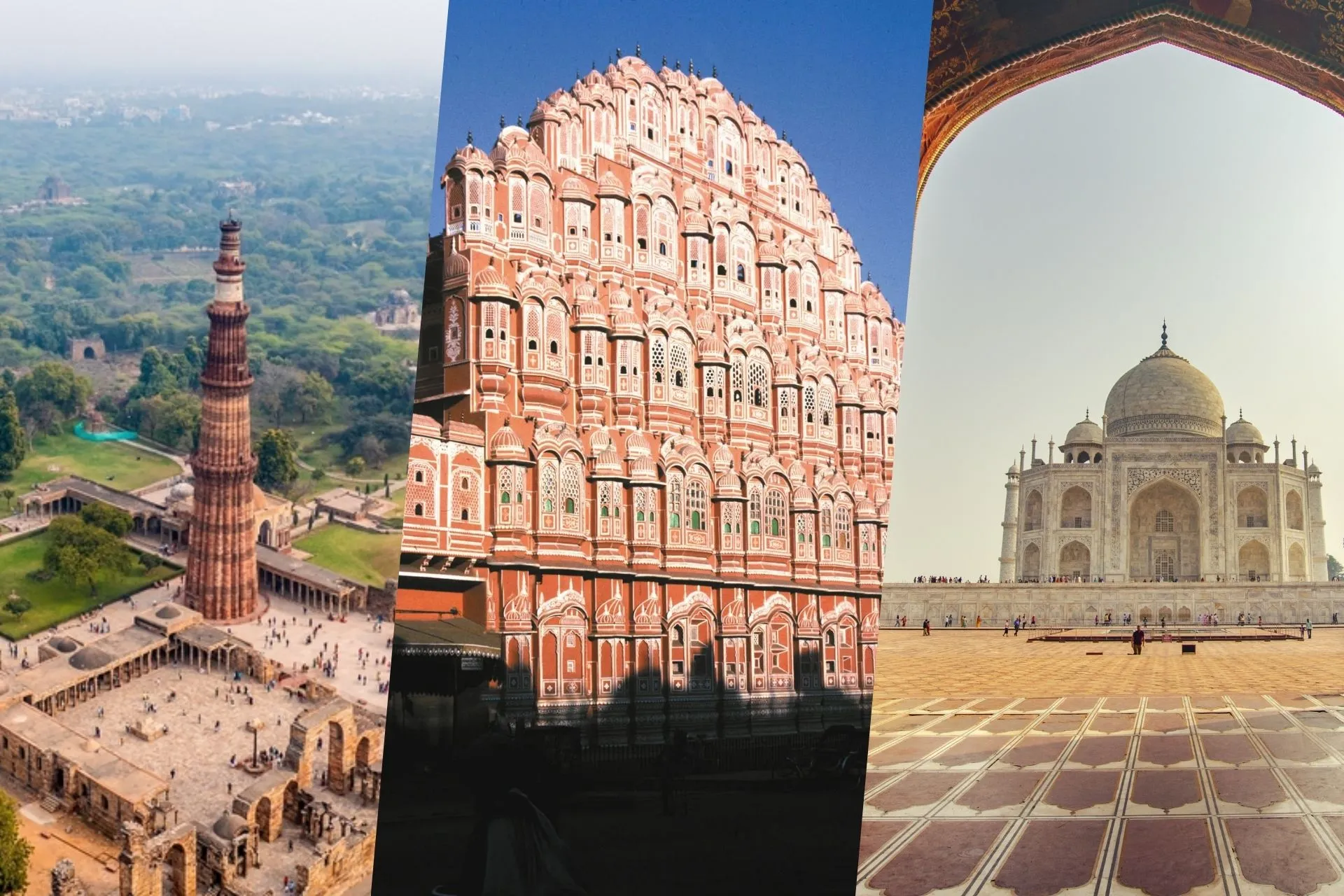
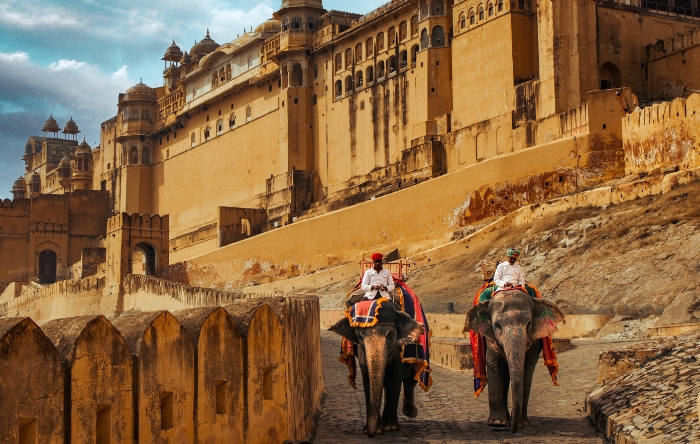
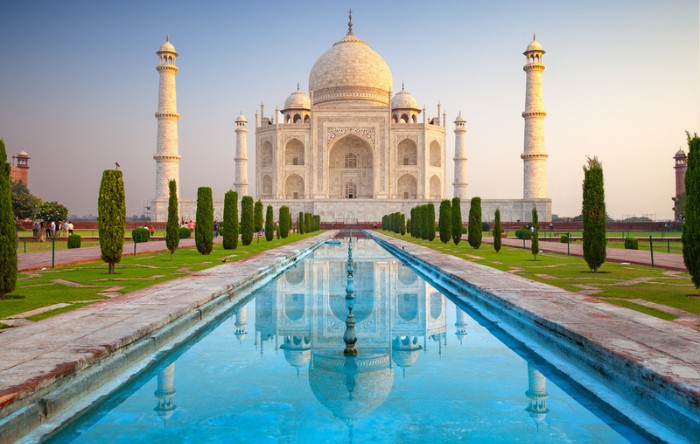
North India has more splendid palaces, temples, and forts with an imperial style and noble temperament. The cultural landscape of North India is shaped primarily by two great historical forces: the Rajput kingdoms of Rajasthan, who built some of the finest forts and palaces on earth; and the Mughal Empire, whose 300-year reign left behind a legacy of monumental architecture — the Taj Mahal, the Red Fort, Humayun's Tomb, Agra Fort, and Fatehpur Sikri — that still defines India's international image.
North India's cultural heritage is imperial in scale and dramatic in character. The monuments are enormous, the history is epic, and the stories — of emperors and queens, of battle and love, of conquest and devotion — are the kind that stay with you long after you have returned home.
Key cultural experiences in North India:
- The Taj Mahal, Agra — the world's most beautiful building, built by a grieving emperor for his wife
- Amber Fort, Jaipur — the finest Rajput fort in India, with its legendary Sheesh Mahal mirror palace
- Red Fort & Old Delhi — the beating heart of Mughal imperial history
- Varanasi — the world's oldest continuously inhabited city, where the sacred Ganga Aarti at dusk is one of the most powerful human experiences anywhere on earth
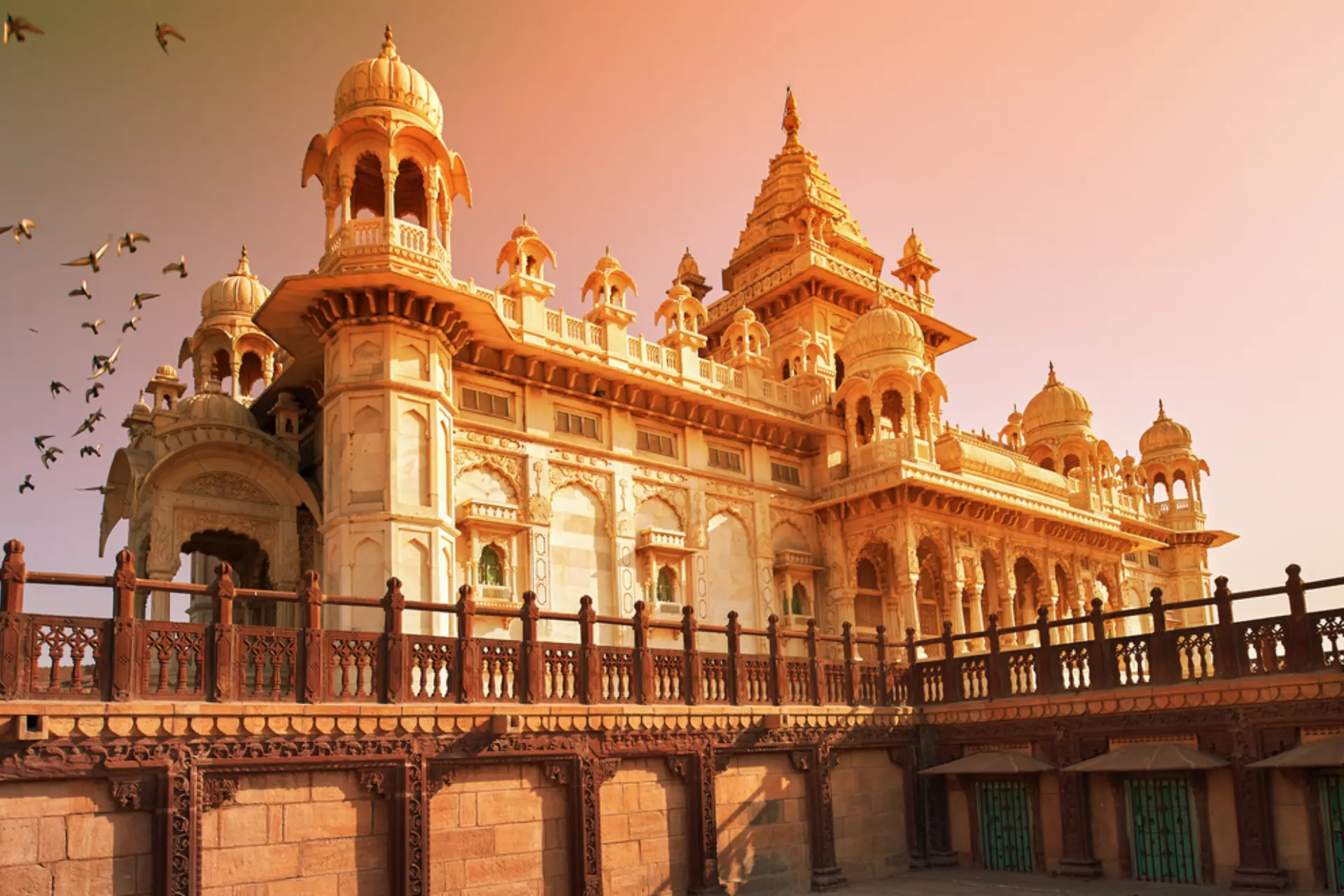
- Rajasthan's desert cities — Jodhpur, Jaisalmer, Udaipur — each a complete world unto itself
South India: Ancient Dravidian Civilisation, Living Temple Culture
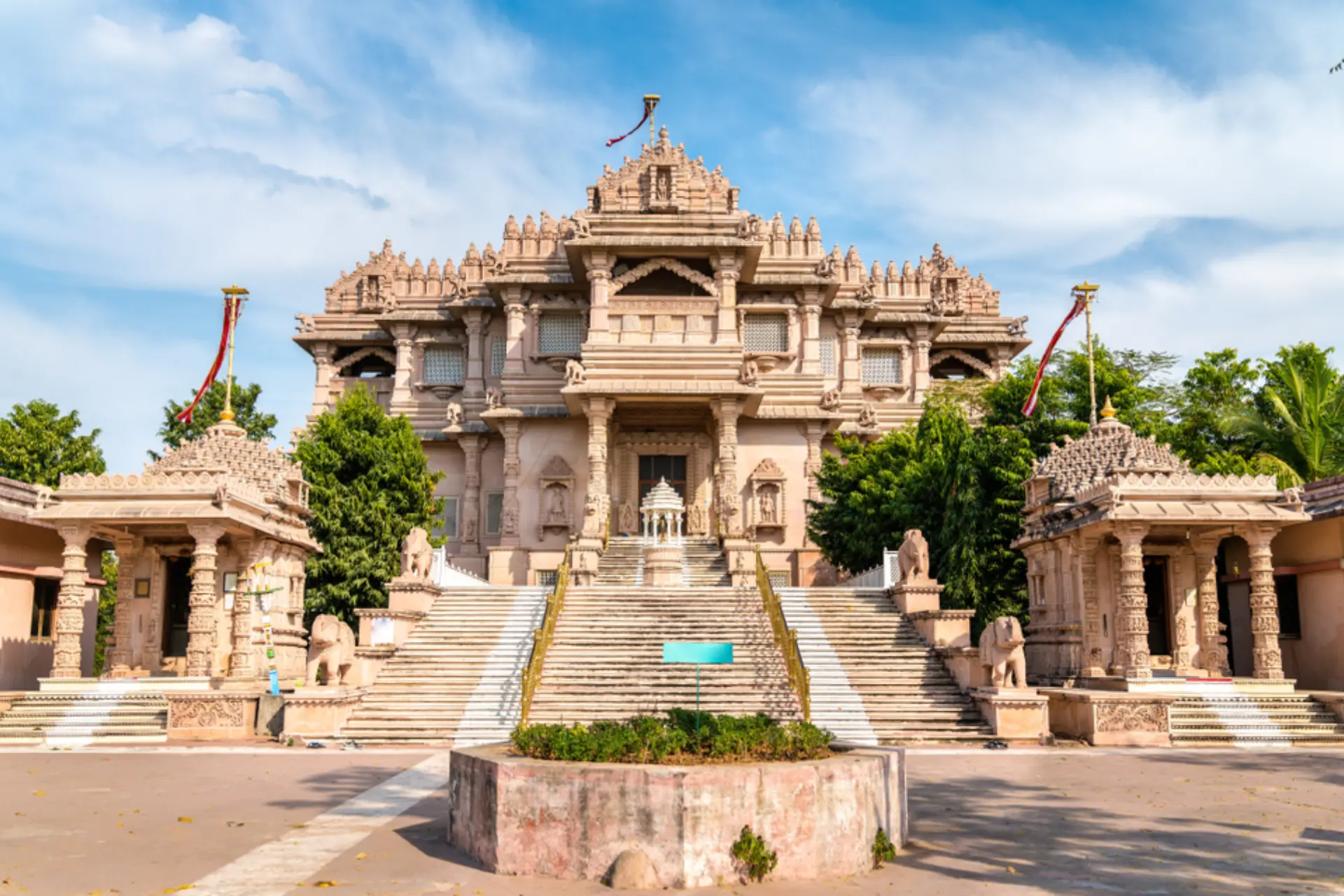
South India has its own beauty and glamour. Generally, north India with its lofty Himalayas and rich relics is deeply influenced by Islam while the south with the wide sea keeps more authentic Indian culture.
South India's cultural heritage is older, more spiritually rooted, and in many ways more authentically continuous than the north. The Dravidian civilisation that shaped South India's culture, architecture, and languages predates the Mughal era by thousands of years — and unlike the north, which saw successive waves of outside influence, South India's culture has evolved more organically from within.
The great temple complexes of Tamil Nadu — Meenakshi Temple in Madurai, Brihadeeswarar Temple in Thanjavur, and the Shore Temple at Mahabalipuram — are architectural achievements of extraordinary sophistication, built not with the resources of an empire but through the accumulated devotion of centuries. South India's culture is expressed less through grand imperial monuments and more through living practice — in the Bharatanatyam dancer, the Carnatic musician, the silk weaver of Kanchipuram, the toddy tapper in the Kerala backwaters.
Key cultural experiences in South India:
- Meenakshi Amman Temple, Madurai — a 14-acre temple complex covered in thousands of painted mythological sculptures
- Hampi, Karnataka — the ruins of the Vijayanagara Empire, a UNESCO World Heritage Site of extraordinary atmosphere
- Mysore Palace — one of India's most magnificent royal palaces, illuminated by 100,000 light bulbs on Sundays
- Kanchipuram — the "City of Thousand Temples," one of India's seven sacred cities
- Fort Kochi — a unique blend of Portuguese, Dutch, British, and Jewish heritage on the Kerala coast
Verdict — Culture: North India wins for internationally recognisable iconic heritage — the monuments that appear on every India bucket list. South India wins for depth, antiquity, and living cultural practice. First-timers: North India. Culture enthusiasts on a return visit: South India.
2. Natural Beauty & Landscapes — North India vs South India
North India: Himalayas, Deserts & Sacred Rivers
North India's natural landscape ranges from the extraordinary to the surreal. North India has a higher elevation. The famous Himalayan foothills are located in its northeast. There are also desert landscapes in the northwest.
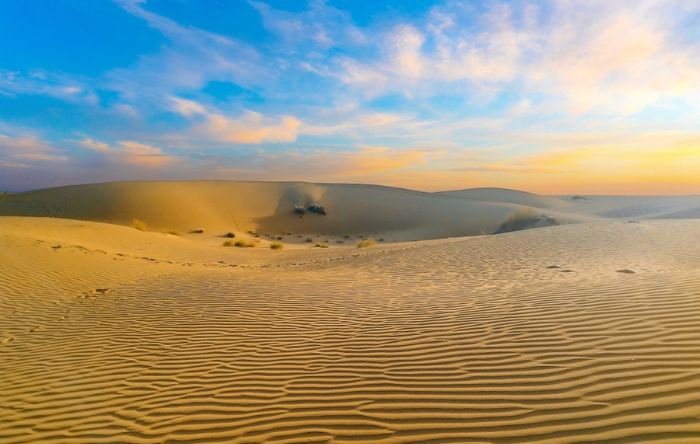
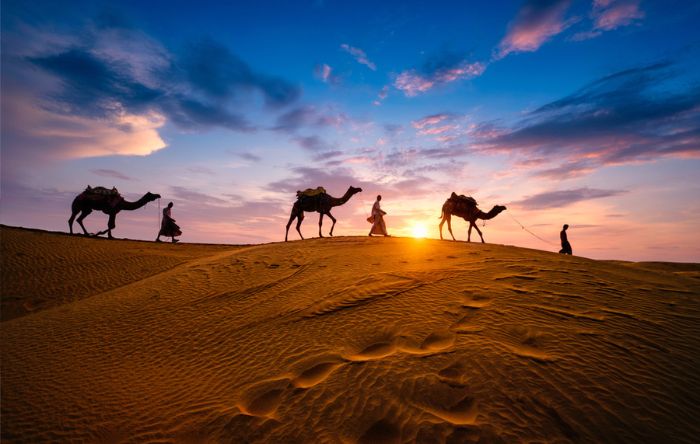
In the west, the Thar Desert of Rajasthan — one of the world's most populated deserts — creates the extraordinary backdrop for Jaisalmer's golden fort and Sam Sand Dunes' camel safaris. The desert landscape of Rajasthan at sunset, when the sky turns crimson and the sand glows gold, is one of the most photographed and most painted landscapes in Indian art.
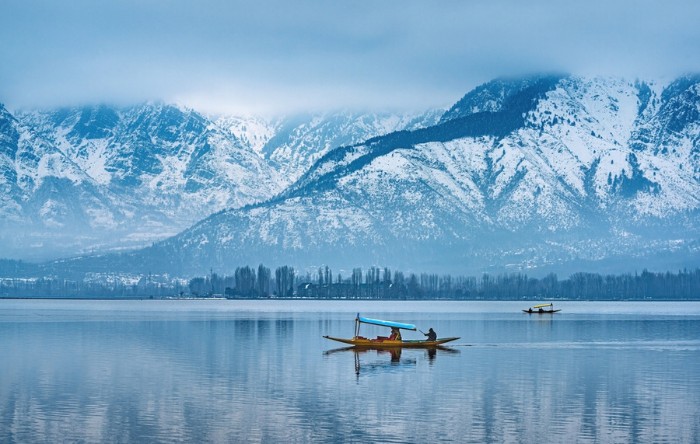
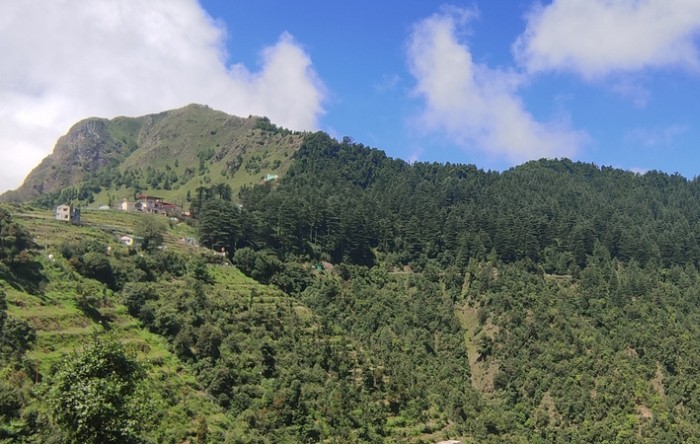
In the north, the Himalayas are India's greatest natural wonder — a wall of ice-capped peaks stretching 2,500 kilometres, containing the world's 14 highest mountains. The Himalayan foothills offer some of India's most dramatic and most photographed landscapes — from the green valleys of Himachal Pradesh to the stark, otherworldly moonscapes of Ladakh, where Buddhist monasteries perch on cliffs above turquoise rivers.
Natural highlights of North India:
- Ladakh — the Himalayan desert kingdom at 3,500 metres, with Pangong Tso Lake and Nubra Valley
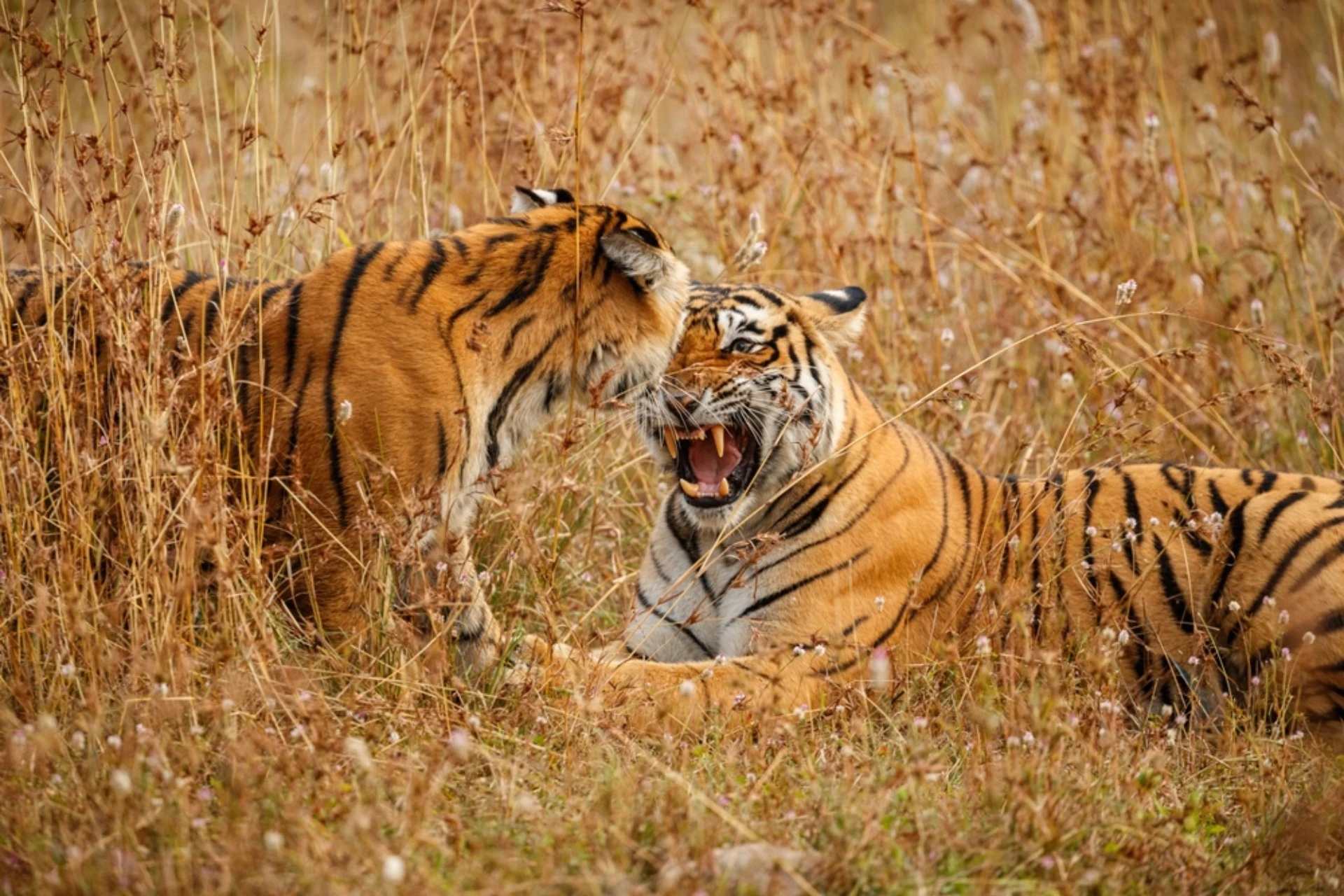
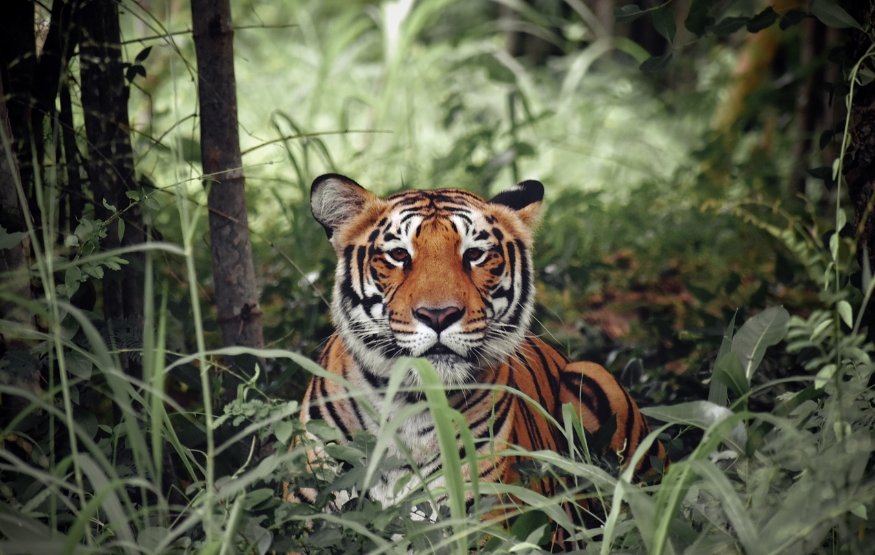
- Ranthambore National Park — Bengal tigers in a dramatic landscape of jungle and medieval ruins
- Thar Desert, Rajasthan — golden sand dunes, camel caravans, and the Milky Way at night
- Rishikesh — the Ganges emerging from the Himalayas, framed by forested mountains
- Valley of Flowers, Uttarakhand — a UNESCO World Heritage Site meadow of Himalayan wildflowers
South India: Tropical Forests, Backwaters & Coastlines
South India is located in low latitudes and embraced by the sea. The tropical landscapes and beaches are its highlights.
South India's natural beauty is lush, green, and intensely alive in a way that North India's more arid landscapes are not. The Western Ghats — a mountain range running the length of the peninsula and a UNESCO World Heritage Site — are one of the world's eight "hottest biodiversity hotspots," teeming with endemic plant and animal species found nowhere else on earth.
Kerala is the jewel of South India's natural landscape — a narrow coastal state of extraordinary beauty, where palm-fringed backwater lagoons, spice-scented hill stations, and wildlife reserves of extraordinary richness coexist within a few hours' drive of each other.
Natural highlights of South India:
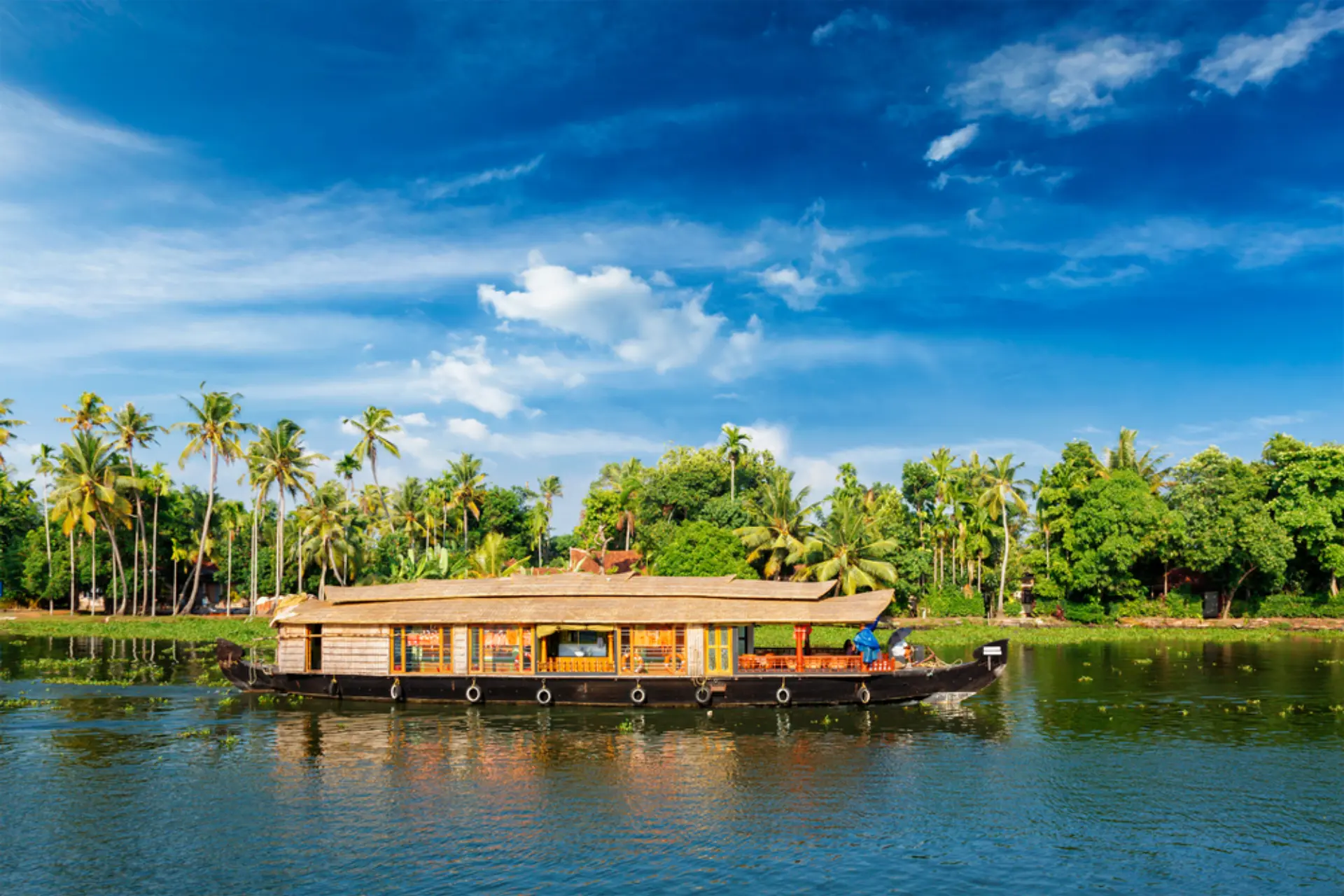
- Kerala Backwaters — 900 km of interconnected lagoons, lakes, rivers, and canals, explored by traditional wooden houseboats
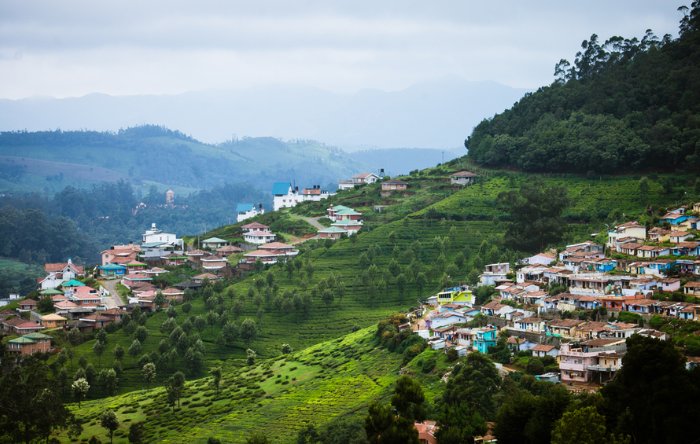
- Munnar Tea Estates — rolling hills carpeted in green tea plantations at 1,700 metres altitude
- Coorg — India's "Scotland," a hill station of coffee plantations, waterfalls, and mist-covered forests
- Andaman Islands — some of Asia's finest coral reefs and clearest waters
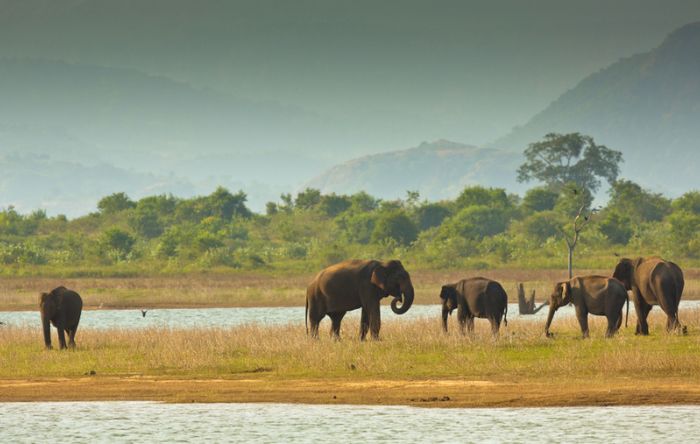
- Periyar Wildlife Reserve — wild elephants bathing in a highland lake, boat safaris at dawn
Verdict — Natural Beauty: Depends entirely on your preference. North India wins for dramatic mountain landscapes, desert scenery, and wildlife safaris. South India wins for tropical lushness, backwaters, beaches, and biodiversity. Both are extraordinary — and entirely different.
3. Food — North India vs South India
Food is perhaps the single most dramatic difference between North and South India — and one of the most exciting reasons to visit both.
North India Food
North Indian food is rich and filling. You will find dishes like butter chicken, dal makhani, naan, paratha, and kebabs. Food often includes dairy products like butter, cream, and ghee. Street food is very popular and full of flavor.
North Indian cuisine is the India that most international visitors from the USA, UK, and Europe already know from Indian restaurants at home — butter chicken, biryani, dal makhani, saag paneer, naan, and tandoori dishes. But eating these dishes in their homeland — fresh from a tandoor oven in Delhi's Chandni Chowk, or at a rooftop restaurant overlooking Jaipur's Pink City — is a completely different and profoundly better experience.
North India's street food culture is extraordinary — particularly in Delhi, which many food writers consider Asia's finest street food city. Chaat from Paranthe Wali Gali in Old Delhi, Mughal kebabs from Karim's near Jama Masjid, jalebi fried fresh in boiling oil at dawn — these are flavours that reshape your understanding of what Indian food is.
Top North India food experiences:
- Old Delhi street food tour — chaat, paranthe, kebabs, jalebis, kulfi
- Dal Baati Churma — Rajasthan's iconic lentil and wheat dumpling dish
- Laal Maas — fiery Rajasthani mutton curry, one of India's great dishes
- Lassi in Jaipur — thick, creamy yoghurt drink, sweet or salted
- Mughal-era kebabs at Karim's, Delhi — open since 1913
South India Food
South Indian food is lighter and often healthier. South Indian cuisine is built around rice, lentils, coconut, tamarind, and an extraordinary variety of fresh vegetables and seafood. The flavours are bright, complex, and deeply aromatic — turmeric, curry leaf, mustard seed, coconut milk, and green chilli creating a flavour palette completely different from the cream-based richness of the north.
For international visitors who find North Indian food too heavy or too rich, South Indian cuisine often comes as a revelation. A fresh dosa — a paper-thin fermented rice and lentil crepe, crisp at the edges and served with coconut chutney and sambar — is one of the finest and most satisfying breakfasts in the world. A Kerala fish curry, made with fresh coconut milk and kokum, is a dish of extraordinary subtlety and sophistication.
Top South India food experiences:
- Masala dosa — the signature South Indian breakfast, best eaten at a Bengaluru Udupi restaurant
- Kerala fish curry — coconut milk, kokum, fresh catch from the Arabian Sea
- Hyderabadi Biryani — arguably India's finest biryani, cooked dum style in a sealed pot
- Chettinad cuisine — Tamil Nadu's most complex and spice-rich cooking tradition
- Filter coffee — South India's beloved coffee, brewed through a traditional metal filter and served in a stainless steel tumbler and davara
Verdict — Food: Both regions are extraordinary — but the food experiences are completely different. North India wins for iconic dishes international visitors already know and love. South India wins for lighter, healthier cooking, exceptional seafood, and some of the world's finest breakfast culture. Serious food travellers: visit both.
4. Climate & Best Time to Visit — North India vs South India
Climate is one of the most practical factors in the North India vs South India decision — and it significantly affects which region is accessible at different times of year.
North India Climate
The best time to visit the furthest-north areas like Leh is in summer.
North India has a dramatic, four-season climate:
|
Season
|
Months
|
Conditions
|
|
Winter (Best)
|
Oct–Mar
|
Cool to cold. 8–25°C. Perfect for sightseeing
|
|
Summer
|
Apr–Jun
|
Hot to very hot. 30–48°C in Rajasthan
|
|
Monsoon
|
Jul–Sep
|
Heavy rain in hills; moderate in Rajasthan
|
|
Post-Monsoon
|
Oct
|
Excellent — green landscapes, clear skies
|
Best time for Golden Triangle & Rajasthan: October to March Best time for Ladakh & Himalayas: June to September
South India Climate
The biggest difference between the best time to travel in north and south India is between the mountainous area in the north and beaches in the south.
South India's tropical climate is more consistent year-round — but it has two distinct monsoon seasons:
|
Season
|
Months
|
Conditions
|
|
Best Season
|
Oct–Feb
|
22–30°C. Dry, comfortable, ideal
|
|
Pre-Monsoon
|
Mar–May
|
Warm. 28–35°C. Manageable
|
|
SW Monsoon
|
Jun–Sep
|
Kerala, Karnataka, Goa get heavy rain
|
|
NE Monsoon
|
Oct–Dec
|
Tamil Nadu coast gets rain
|
Best time for Kerala: October to February
Best time for Tamil Nadu: November to March (avoiding northeast monsoon)
Best time for Goa: November to February
Verdict — Climate: If you are visiting between October and March (when most international tourists travel), both regions are accessible and excellent. If your travel dates fall in June to September, South India is generally more manageable as North India becomes very hot. The key exception: Ladakh and Himalayan North India are best in June to September.
5. Ease of Travel — North India vs South India
This is an honest and important comparison for international first-time visitors.
North India — Vibrant but Intense
The gap between what your home environment has prepared you for and what India delivers on day one is genuinely shocking for many first-timers — the density, the noise, the negotiation, the infrastructure variation, the sensory overload.
North India — particularly Delhi, Agra, and Varanasi — is India at its most intense. The cities are dense, loud, and visually overwhelming. Tourist touts are persistent at major monuments. Traffic in Delhi and Agra can be chaotic. The energy is electric and thrilling — but for travellers arriving from the quiet suburbs of the USA or Germany, the first 24 hours in Delhi can feel genuinely overwhelming.
This is why My Dream India Tour's private tour service — with a dedicated vehicle, licensed guide, and 24/7 WhatsApp support — transforms the North India experience from potentially stressful to genuinely extraordinary. Having an expert local guide manage every logistics detail means you can focus entirely on the wonder of what you are experiencing.
South India — Gentler Entry Point
South India lands more gently. Kerala in particular operates on an infrastructure standard meaningfully better than the North Indian tourist circuit — roads are maintained, auto-rickshaws use meters more reliably, the police tourism units are professional.
South India — particularly Kerala and Karnataka — offers a generally more relaxed, more organised, and less overwhelming travel experience. Tourist infrastructure is excellent, English is widely spoken (often better than in the north), and the pace of life is noticeably calmer.
South India is generally considered cleaner, safer, and more organised. Cities follow traffic rules better, and public spaces feel well-maintained.
Verdict — Ease of Travel: South India is genuinely easier and less overwhelming for nervous first-time travellers. However, for most international visitors travelling with a reputable private tour operator, the perceived difficulty of North India is largely eliminated — and the rewards are extraordinary.
6. Cost Comparison — North India vs South India
|
Category
|
North India
|
South India
|
|
Budget hotel
|
$15–$40 per night
|
$20–$50 per night
|
|
3-Star hotel
|
$50–$100 per night
|
$60–$120 per night
|
|
5-Star / Heritage
|
$150–$500+ per night
|
$120–$400+ per night
|
|
Meals (mid-range)
|
$5–$15 per meal
|
$8–$20 per meal
|
|
Private car per day
|
$60–$90
|
$70–$100
|
|
Monument entry (foreign)
|
₹300–₹600
|
₹50–₹500
|
|
Overall trip cost
|
Moderate
|
Slightly higher
|
Verdict — Cost: North India is marginally cheaper overall — particularly for accommodation in Rajasthan and Agra. South India's Kerala luxury houseboats and hill station resorts can be more expensive. Both offer extraordinary value compared to equivalent quality travel in Europe or North America.
7. Top Destinations — North India vs South India
North India's Must-Visit Destinations
- Delhi — India's capital; the Red Fort, Humayun's Tomb, Qutub Minar, Old Delhi
- Agra — Home of the Taj Mahal, Agra Fort, Fatehpur Sikri
- Jaipur — Pink City; Amber Fort, City Palace, Hawa Mahal
- Jodhpur — Blue City; Mehrangarh Fort, vibrant bazaars
- Jaisalmer — Golden Desert City; living fort, Sam Sand Dunes
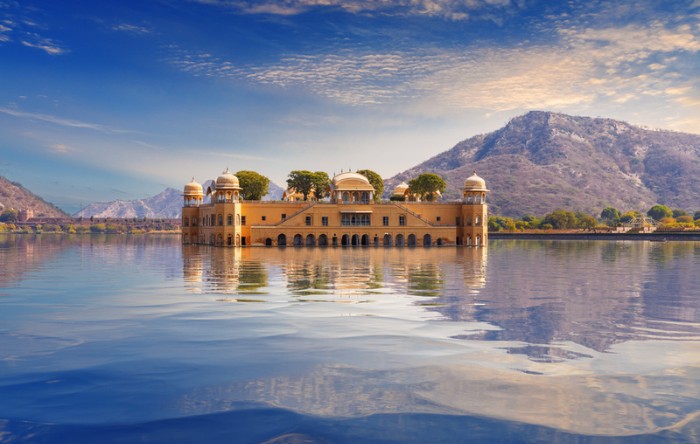
- Udaipur — City of Lakes; City Palace, Lake Pichola, Jag Mandir
- Varanasi — Holiest city; Ganga Aarti, ancient ghats, Sarnath
- Rishikesh — Yoga capital; Ganges, Laxman Jhula, white-water rafting
- Leh-Ladakh — Himalayan kingdom; Pangong Lake, Khardung La, monasteries
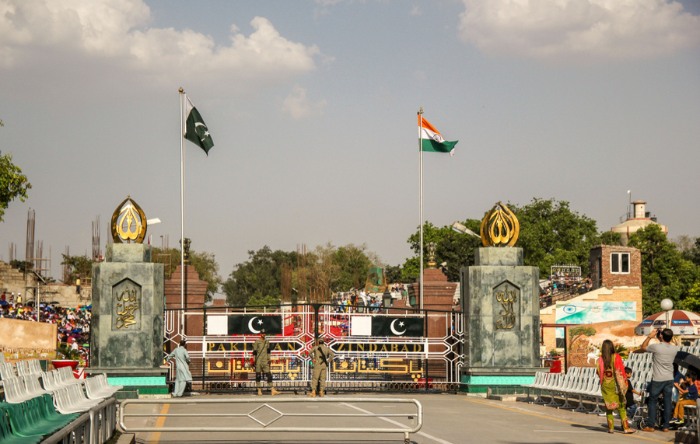
- Amritsar — Golden Temple, Wagah Border ceremony
South India's Must-Visit Destinations
- Kerala Backwaters (Alleppey/Kumarakom) — Houseboat overnight on tranquil lagoons Munnar — Tea estate hill station at 1,700m altitude
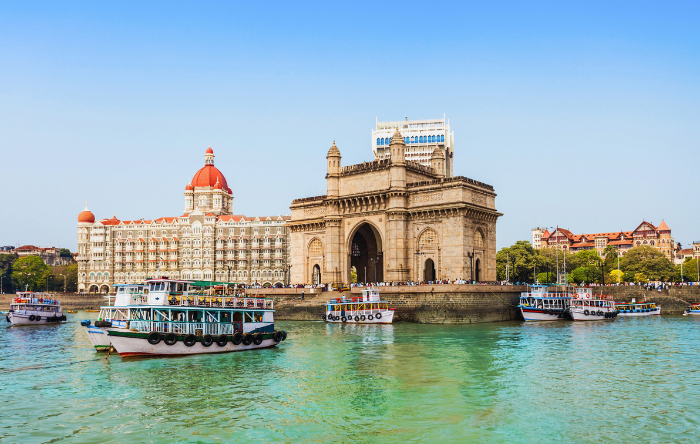
- Kochi (Fort Kochi) — Colonial heritage, Chinese fishing nets, Jewish quarter
- Mysore — Palace city; Mysore Palace, Chamundeshwari Temple
- Hampi, Karnataka — UNESCO World Heritage ruins of Vijayanagara Empire
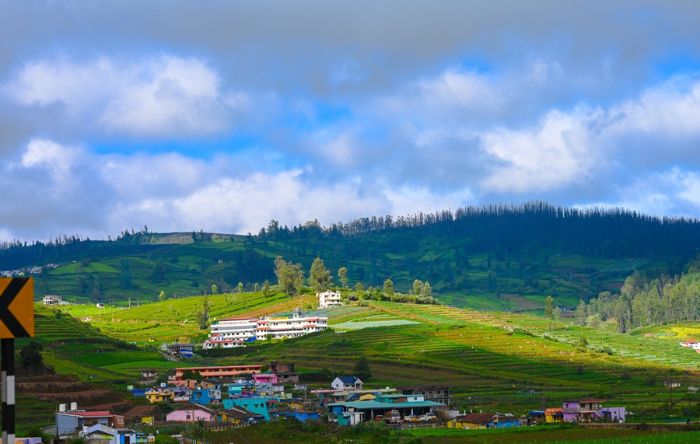
- Ooty (Udhagamandalam) — Classic hill station; Nilgiri Mountain Railway
- Madurai — Meenakshi Amman Temple, one of India's greatest
- Mahabalipuram — UNESCO World Heritage Shore Temple, ancient rock carvings
- Hyderabad — Golconda Fort, Charminar, Hyderabadi Biryani
- Pondicherry — French colonial architecture, ashram culture, beaches
8. Which Is Better for Specific Types of Travellers?
First-Time India Visitors
North India wins. Most first-timers start with the Golden Triangle (Delhi-Agra-Jaipur) — a compact circuit packed with India's most famous sights. The Golden Triangle delivers maximum India in minimum time with excellent infrastructure.
Solo Female Travellers
Go South first if you are a solo female traveller. South India consistently rates lower for tourist harassment than Delhi, Agra, and Varanasi. Kerala and Karnataka are particularly welcoming to solo women travellers.
Honeymooners & Couples
Both win differently. North India for romance and grandeur — Udaipur's lake palace at sunset, the Taj Mahal at sunrise. South India for intimacy and tranquillity — a Kerala houseboat on the backwaters, a private villa in Coorg. Many honeymoon packages combine both.
History & Heritage Lovers
North India wins narrowly — the concentration of UNESCO World Heritage Sites, Mughal monuments, and Rajput forts is unmatched anywhere in the world. However, South India's Hampi, Mahabalipuram, and temple cities offer a deeper and older historical perspective.
Wildlife Enthusiasts
North India wins — Ranthambore tigers, Jim Corbett elephants, Bharatpur birds. South India has excellent wildlife at Periyar (elephants), Bandipur, and Nagarhole, but tiger sightings are less reliable than in North India's reserves.
Food Lovers
Tie — both are extraordinary but completely different. Serious food travellers should visit both: North India for Mughal and Rajasthani cuisine; South India for Dravidian cooking, Kerala seafood, and the world's finest breakfast culture.
Nature & Beach Lovers
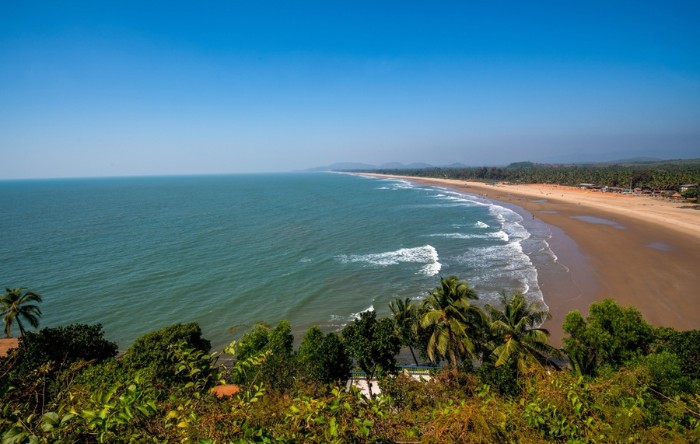
South India wins — Kerala backwaters, Goa beaches, Western Ghats biodiversity, Andaman Islands. North India's Himalayan scenery is more dramatic, but for tropical nature, South India is incomparable.
Photographers
North India wins for monuments — Amber Fort's Sheesh Mahal, the Taj Mahal at sunrise, Mehrangarh rising above Jodhpur's blue rooftops. South India wins for nature photography — Kerala backwaters at dawn, Munnar tea estates in mist, Hampi's boulder-strewn landscape at sunset.
9. The Best Option of All — Visit Both
The honest truth is that the North India vs South India question has one ideal answer: visit both, on separate trips.
India is not a country you exhaust in one visit. Every traveller who comes to India once returns to go deeper — and the north-south split offers the perfect framework for a two-trip India relationship.
Trip 1 — North India (10–14 days): Golden Triangle (Delhi, Agra, Jaipur) + Rajasthan extension (Jodhpur, Jaisalmer, Udaipur) + optional Ranthambore tiger safari. Our North India Tour Packages and Rajasthan Tour Packages are designed exactly for this — private, fully customised, expert-guided.
Trip 2 — South India (10–14 days): Kerala backwaters + Munnar + Fort Kochi + Tamil Nadu temples + Hampi. Our South India Tour Packages cover the finest of the south in beautifully paced private itineraries.
For travellers with 21+ days: Combine both in a single grand India journey — fly into Delhi, do the Golden Triangle and Rajasthan, then fly south to Kochi for Kerala and Tamil Nadu. My Dream India Tour designs exactly these kind of comprehensive north-south combination itineraries for our guests from the USA, UK, Canada, France, and Germany.
Plan Your North or South India Tour with My Dream India Tour
Whether you have decided on North India, South India, or the ideal combination of both — My Dream India Tour is your Jaipur-based private tour partner for every India journey.
We specialise in:
- North India Tour Packages — Delhi, Agra, Varanasi, Ladakh, Rishikesh
- South India Tour Packages — Kerala, Tamil Nadu, Karnataka, Goa
- Rajasthan Tour Packages — Jaipur, Jodhpur, Jaisalmer, Udaipur
- Golden Triangle Tours — Delhi, Agra & Jaipur
- Wildlife Safari Tours — Ranthambore, Jim Corbett, Bandhavgarh
Every itinerary is 100% private and customised — your dates, your pace, your budget. Licensed English-speaking guides, private AC vehicles, handpicked hotels, and 24/7 WhatsApp support throughout.
Rated #186 of 1,161 Tours & Activities in Jaipur on TripAdvisor with 5-star reviews from hundreds of international travellers.
Call / WhatsApp: +91-87695-95984 | +91-70625-12828
Email: mydreamindiatour@gmail.com
Website: www.mydreamindiatour.com
Based in: Jaipur, Rajasthan, India
My Dream India Tour — Crafting Journeys as Timeless as India Itself.
Frequently Asked Questions — North India vs South India
Q: Which is better for a first trip to India — North or South?
For most international first-time visitors, North India is the recommended starting point — specifically the Golden Triangle of Delhi, Agra, and Jaipur. It delivers the most iconic India experiences in the shortest time, with excellent tourist infrastructure and the world's most famous monuments including the Taj Mahal.
Q: Is South India safer than North India for tourists?
South India is generally considered cleaner, safer, and more organised. Cities follow traffic rules better, and public spaces feel well-maintained. North India is also safe, but crowded areas require more awareness. For most international tourists — particularly those travelling with a reputable private tour operator — both regions are very safe.
Q: Which region has better food — North or South India?
Both regions have extraordinary, world-class cuisine — but they are completely different. North Indian food is richer, creamier, and more familiar to international visitors. South Indian food is lighter, healthier, and built around rice, lentils, coconut, and seafood. Serious food travellers should experience both.
Q: Can I visit both North and South India in one trip?
Yes — with 18 to 21 days, a comfortable north-south combination is very achievable. Fly into Delhi, complete the Golden Triangle and Rajasthan circuit (10–12 days), then fly to Kochi for a Kerala and Tamil Nadu itinerary (7–8 days). My Dream India Tour designs these combination packages regularly for our international guests.
Q: What is the best time to visit both North and South India?
October to February is the best window for both regions simultaneously — making it ideal for a combination trip. December and January are particularly excellent for both North India (crisp, clear sightseeing weather) and South India (dry season in Kerala and Tamil Nadu).
Q: How long do I need for a North India trip?
A trip to North India lasting 7 to 14 days is picked by most travellers. 7 days is a basic requirement for the classic combination of Delhi, Agra, and Jaipur — India's Golden Triangle. For a fuller Rajasthan experience, 10 to 14 days is ideal.

.jpg)














.jpg)
.jpg)
.jpg)



.webp)
